

What is Ankylosing Spondylitis? Symptoms, Causes, Risk Factors & Treatment
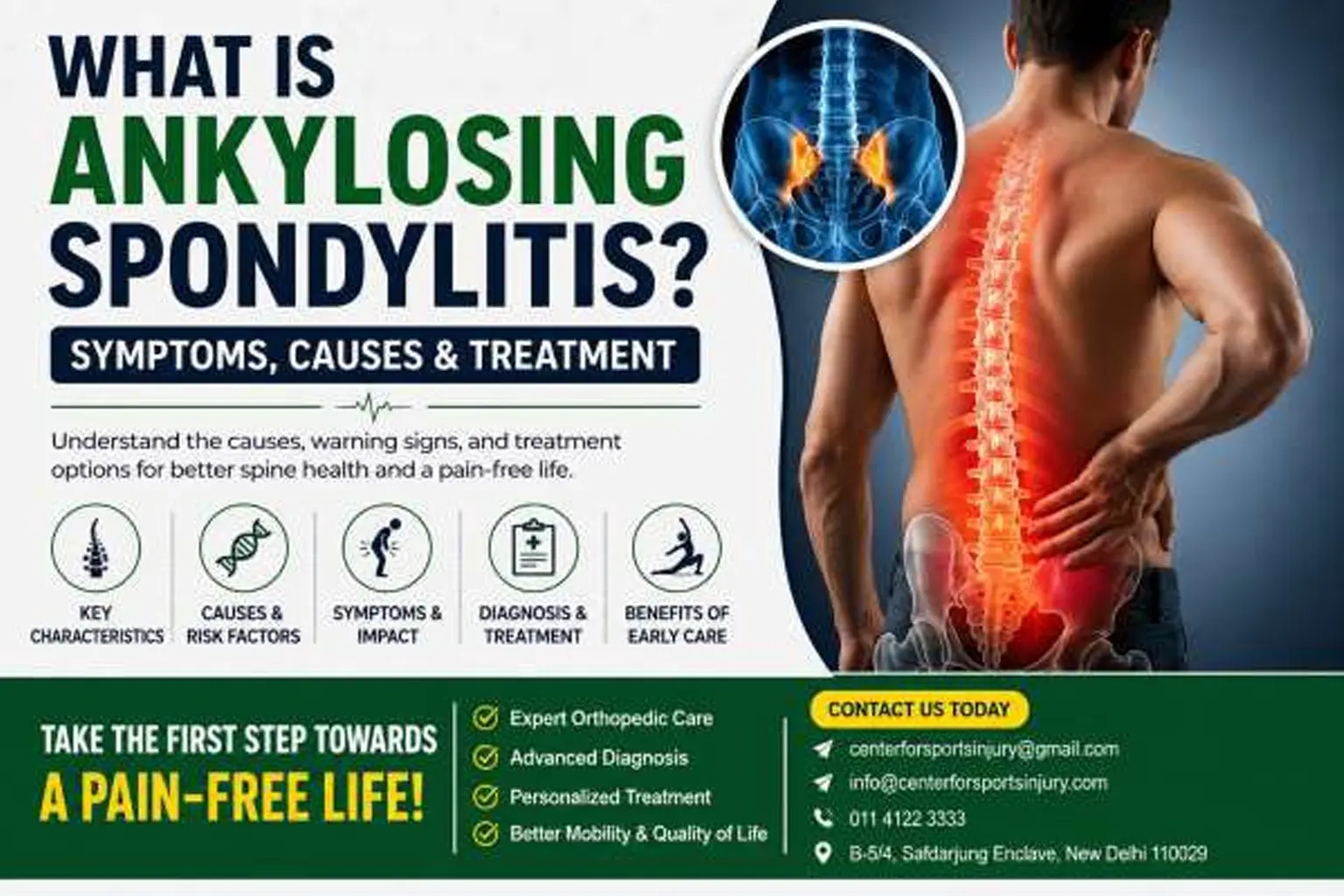
Back pain is one of the most common reasons people seek orthopedic care. While many cases are caused by muscle strain or sports injuries, persistent back pain that improves with movement and worsens after rest may indicate an inflammatory condition known as Ankylosing Spondylitis (AS).
Ankylosing Spondylitis is a chronic inflammatory disease that primarily affects the spine and sacroiliac joints, causing pain, stiffness, and reduced mobility. If left untreated, the inflammation may lead to the fusion of spinal bones, limiting flexibility and affecting posture. Early diagnosis and appropriate treatment can significantly improve quality of life and help individuals maintain an active lifestyle.
What is Ankylosing Spondylitis?
Ankylosing Spondylitis is a type of inflammatory arthritis that mainly affects the spine. It belongs to a group of conditions called spondyloarthritis. The disease causes the body's immune system to attack healthy tissues around the spine and joints, leading to chronic inflammation.
Although the spine is the primary area affected, AS can also involve the hips, shoulders, knees, eyes, and other organs. The condition typically develops between the ages of 16 and 40 and is more common in men than women.
Key Characteristics of Ankylosing Spondylitis
Some of the defining features of Ankylosing Spondylitis include:
- Chronic lower back pain lasting more than three months
- Morning stiffness that improves with physical activity
- Inflammation of the sacroiliac joints
- Reduced flexibility of the spine
- Progressive fusion of spinal vertebrae in advanced stages
- Pain and stiffness in the hips and shoulders
- Inflammation where tendons and ligaments attach to bones (enthesitis)
- Occasional involvement of the eyes, intestines, and skin
Unlike mechanical back pain, the discomfort associated with Ankylosing Spondylitis often improves with exercise rather than rest.
Benefits of Early Diagnosis and Treatment
Recognizing Ankylosing Spondylitis in its early stages can prevent long-term complications and preserve spinal mobility.
Benefits of early treatment include:
- Better control of pain and inflammation
- Slower disease progression
- Improved posture and flexibility
- Reduced risk of spinal deformity
- Better quality of life
- Lower chances of joint damage and disability
- Ability to continue work, sports, and daily activities
Seeking timely evaluation by an orthopedic or spine specialist can help distinguish inflammatory back pain from sports injuries or other spinal conditions.
Causes and Risk Factors
The exact cause of Ankylosing Spondylitis is not fully understood. However, researchers believe that a combination of genetic and environmental factors contributes to the condition.
Genetic Factors
One of the strongest risk factors is the presence of the HLA-B27 gene. Although many individuals with this gene never develop AS, it significantly increases the risk.
Other Risk Factors
- Family history of Ankylosing Spondylitis
- Male gender
- Age between 16 and 40 years
- History of inflammatory bowel disease
- Certain immune system abnormalities
Having one or more risk factors does not necessarily mean someone will develop the condition.
Symptoms of Ankylosing Spondylitis
Symptoms usually develop gradually and may vary from person to person. Common symptoms include:
- Persistent lower back pain
- Morning stiffness lasting more than 30 minutes
- Pain in the buttocks
- Neck pain
- Hip pain
- Shoulder stiffness
- Fatigue
- Reduced spinal flexibility
- Difficulty standing upright
Some individuals may also experience symptoms outside the spine, such as:
- Eye inflammation (uveitis)
- Heel pain due to enthesitis
- Chest discomfort caused by reduced rib movement
- Digestive problems associated with inflammatory bowel disease
- Skin conditions like psoriasis
If symptoms continue for several weeks or worsen over time, medical evaluation is recommended.
Impact of Ankylosing Spondylitis on Daily Life
Without proper treatment, Ankylosing Spondylitis can affect multiple aspects of daily living.
Patients may experience:
- Difficulty walking long distances
- Reduced ability to bend or twist
- Poor posture due to spinal stiffness
- Sleep disturbances caused by pain
- Limited participation in sports and exercise
- Reduced work productivity
- Emotional stress due to chronic pain
In advanced cases, spinal bones may gradually fuse together, creating a rigid spine commonly referred to as a "bamboo spine."
How is Ankylosing Spondylitis Diagnosed?
Early diagnosis can sometimes be challenging because symptoms resemble common back pain.
Doctors typically evaluate:
- Medical history
- Physical examination
- Range of motion assessment
- Blood tests, including HLA-B27
- Inflammatory markers (ESR and CRP)
- X-rays of the sacroiliac joints
- MRI scans to detect early inflammation
A combination of clinical findings and imaging studies helps confirm the diagnosis.
Treatment Options for Ankylosing Spondylitis
Although there is currently no permanent cure, several treatments help control symptoms and slow disease progression.
Medications
Doctors may prescribe:
- Nonsteroidal anti-inflammatory drugs (NSAIDs)
- Biologic medications
- Disease-modifying antirheumatic drugs (DMARDs) for selected patients
- Corticosteroid injections for localized inflammation
Treatment is individualized based on disease severity and overall health.
Physiotherapy
Regular physiotherapy plays an important role in maintaining mobility.
Benefits include:
- Improved posture
- Increased flexibility
- Better muscle strength
- Reduced stiffness
- Improved breathing exercises
Stretching and strengthening exercises are often recommended as part of long-term management.
Lifestyle Changes
Healthy habits can help manage symptoms effectively. Patients should:
- Stay physically active
- Maintain good posture
- Avoid smoking
- Maintain a healthy weight
- Practice daily stretching
- Sleep on a supportive mattress
Low-impact activities such as swimming, walking, and cycling are generally beneficial.
Surgery
Surgery is rarely required but may be recommended when severe joint damage develops. Procedures may include:
- Hip replacement
- Corrective spinal surgery in selected cases
These interventions are considered only after careful evaluation by an orthopedic surgeon.
When Should You See a Specialist?
Consult an orthopedic or spine specialist if you experience:
- Back pain lasting longer than three months
- Morning stiffness that improves with activity
- Difficulty bending or standing upright
- Pain associated with eye redness or vision problems
- Persistent hip or buttock pain
- Family history of Ankylosing Spondylitis
Conclusion
Ankylosing Spondylitis is a chronic inflammatory condition that primarily affects the spine and can significantly impact mobility and quality of life if left untreated. However, with early diagnosis, appropriate medication, regular physiotherapy, and healthy lifestyle habits, many individuals can effectively manage their symptoms and continue leading active lives. If you experience persistent back pain, morning stiffness, or reduced spinal flexibility, seeking timely medical evaluation is essential to prevent long-term complications.
At Center for Sports Injury, our orthopedic specialists provide comprehensive evaluation and personalized treatment for a wide range of spine, joint, and musculoskeletal conditions, including Ankylosing Spondylitis. With a patient-centered approach and evidence-based care, the team focuses on accurate diagnosis, effective treatment, and long-term rehabilitation to help patients regain mobility and improve their overall quality of life.
Frequently Asked Questions (FAQs)
1. What is Ankylosing Spondylitis?
Ankylosing Spondylitis is a chronic inflammatory arthritis that mainly affects the spine and sacroiliac joints, causing pain, stiffness, and reduced flexibility.
2. What are the early symptoms of Ankylosing Spondylitis?
Early symptoms include lower back pain, morning stiffness, buttock pain, and discomfort that improves with movement.
3. Is Ankylosing Spondylitis hereditary?
Genetics play an important role. People with a family history or the HLA-B27 gene have a higher risk of developing the condition.
4. Can Ankylosing Spondylitis be cured?
There is currently no cure, but medications, physiotherapy, and lifestyle modifications can effectively control symptoms and slow disease progression.
5. Is exercise beneficial for Ankylosing Spondylitis?
Yes. Regular stretching, strengthening exercises, swimming, walking, and physiotherapy help improve flexibility and reduce stiffness.
6. When should I seek medical attention for chronic back pain?
If back pain lasts longer than three months, is worse in the morning, improves with activity, or is accompanied by stiffness or eye inflammation, consult a healthcare professional for evaluation.