

Bilateral Robotic Total Knee Replacement
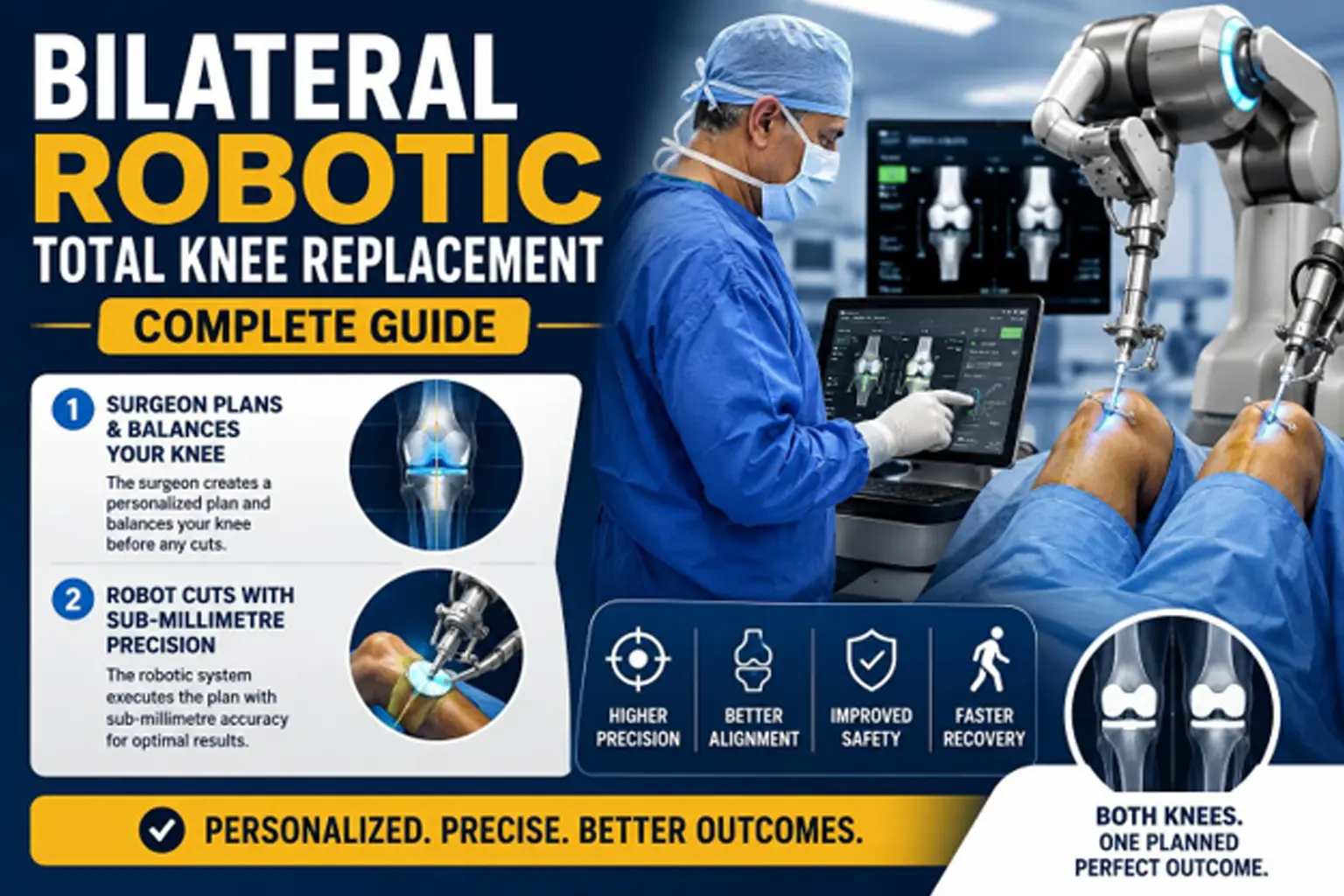
Knee pain can slowly affect every part of daily life. Walking, climbing stairs, standing for long hours, or even getting out of bed may become difficult when both knees are severely damaged due to arthritis or injury. For many patients, Bilateral Robotic Total Knee Replacement offers a highly advanced and effective solution to restore movement and reduce chronic pain.
Bilateral Robotic Total Knee Replacement is a modern surgical procedure in which both knees are replaced during the same surgical session using robotic assisted technology. This approach allows greater precision, improved implant alignment, reduced tissue damage, and better long- term function. At Center for Sports Injury, advanced robotic joint replacement procedures are performed using a patient focused and evidence-based approach supported by modern rehabilitation facilities.
What is Bilateral Robotic Total Knee Replacement
Bilateral Robotic Total Knee Replacement refers to the replacement of both damaged knee joints in one surgical procedure with the help of robotic technology. During the surgery, the worn- out cartilage and damaged surfaces are removed and replaced with artificial implants designed to restore smooth joint movement.
Robotic assistance helps surgeons create a highly accurate surgical plan tailored to the patient’s anatomy. This technology improves precision in bone preparation and implant positioning, which may lead to better joint balance and improved recovery outcomes.
Patients suffering from severe arthritis in both knees often choose Bilateral Robotic Total Knee Replacement because it reduces the need for two separate surgeries and allows a single rehabilitation period.
Who Needs Bilateral Robotic Total Knee Replacement
A patient may be advised to undergo Bilateral Robotic Total Knee Replacement when both knees are significantly affected and conservative treatments are no longer effective.
Common signs include:
- Severe knee pain during walking or resting
- Difficulty climbing stairs
- Swelling and stiffness in both knees
- Limited range of motion
- Knee deformity or instability
- Reduced quality of life due to chronic pain
Conditions That May Require Bilateral Knee Replacement
Several conditions can lead to severe knee joint damage:
1. Osteoarthritis
This is the most common reason for knee replacement surgery. Cartilage gradually wears away, causing pain and stiffness.
2. Rheumatoid Arthritis
Inflammatory arthritis can damage the knee joint lining and surrounding tissues.
3. Post Traumatic Arthritis
Previous injuries or fractures around the knee may result in long term joint degeneration.
4. Advanced Joint Degeneration
Patients with severe cartilage loss in both knees may benefit from Bilateral Robotic Total Knee Replacement to regain mobility.
How Robotic Technology Improves Knee Replacement Surgery
Robotic assisted knee replacement surgery has transformed modern orthopaedic care. Robotic systems help surgeons perform the procedure with greater control and accuracy.
Key advantages include:
- Precise implant positioning
- Better joint alignment
- Reduced damage to surrounding tissues
- Improved knee balance
- Personalized surgical planning
- Potentially faster recovery
At Center for Sports Injury, robotic and navigation assisted knee replacement procedures are part of their advanced orthopaedic and joint replacement services.
Benefits of Bilateral Robotic Total Knee Replacement
Advantage and Planning-
- The surgeon plans the procedure and precisely balances your knee before any bone is
- The robotic system then executes the surgical plan with sub-millimeter
Bilateral Robotic Total Knee Replacement offers several advantages for eligible patients.
1. Single Hospital Admission
Both knees are treated in one surgery, reducing multiple hospital stays.
2. One Rehabilitation Period
Patients recover from both knee replacements simultaneously, which may reduce overall recovery time.
3. Better Mobility
Replacing both knees together can improve walking balance and overall movement.
4. Long Term Pain Relief
The surgery helps reduce chronic knee pain caused by severe arthritis.
5. Improved Precision with Robotics
Robotic assistance enhances surgical accuracy and implant positioning.
Step by Step Procedure of Bilateral Robotic Knee Replacement
The procedure usually involves the following stages:
1. Pre Surgical Evaluation
Detailed imaging, blood tests, and physical assessments are performed before surgery.
2. Surgical Planning
Robotic software creates a customized plan based on the patient’s anatomy.
3. Knee Joint Preparation
The damaged cartilage and bone are carefully removed.
4. Implant Placement
Artificial knee implants are positioned with robotic guidance for improved alignment.
5. Closure and Rehabilitation
After surgery, physiotherapy begins early to support recovery and mobility.
Recovery After Bilateral Robotic Total Knee Replacement
Recovery depends on age, overall health, and rehabilitation commitment. Most patients begin walking with support within a few days after surgery.
Recovery Timeline
- Early walking may begin within 24 to 48 hours
- Physiotherapy continues for several weeks
- Daily activities gradually improve over time
- Full recovery may take a few months
Following the rehabilitation program properly is important for achieving the best long term results.
At Center For Sports Injury, patients have access to comprehensive physiotherapy and rehabilitation support under one roof.
Risks and Complications
Like any major surgery, Bilateral Robotic Total Knee Replacement may involve certain risks, although complications are relatively uncommon when performed by experienced specialists. Possible risks include:
- Infection
- Blood clots
- Implant loosening
- Stiffness
- Swelling
- Temporary discomfort during recovery
Proper patient selection, surgical expertise, and post operative rehabilitation help minimize these risks.
Why Choose Center For Sports Injury for Robotic Knee Replacement
Center For Sports Injury is an advanced orthopaedic and sports medicine facility in Delhi offering modern robotic joint replacement solutions with comprehensive rehabilitation support. The center is led by experienced orthopaedic and joint replacement specialists and provides minimally invasive and robotic assisted procedures supported by advanced imaging and physiotherapy services.
Dr. Pushpinder Singh Bajaj has extensive experience in joint replacement and sports surgery with international training and expertise in robotic knee replacement procedures.
Conclusion
Bilateral Robotic Total Knee Replacement is an advanced solution for patients suffering from severe arthritis and chronic pain in both knees. With robotic precision, personalized surgical planning, and structured rehabilitation, patients can achieve improved mobility, pain relief, and a better quality of life.
Choosing an experienced orthopaedic center plays a major role in successful outcomes. Center For Sports Injury offers advanced robotic knee replacement care combined with modern rehabilitation and patient centered treatment approaches.
FAQs
1. Is Bilateral Robotic Total Knee Replacement safe
Yes, for properly selected patients, it is considered a safe and effective procedure when performed by experienced orthopaedic surgeons.
2. How long does recovery take after Bilateral Robotic Total Knee Replacement
Most patients recover significantly within a few months, although complete recovery may vary depending on rehabilitation and overall health.
3. What are the advantages of robotic knee replacement surgery
Robotic technology improves precision, implant alignment, and joint balance while potentially reducing tissue damage.
4. Can both knees be replaced at the same time
Yes, Bilateral Robotic Total Knee Replacement allows both knees to be replaced during one surgical session.
5. Who is a good candidate for Bilateral Robotic Total Knee Replacement
Patients with severe arthritis or joint damage in both knees who have not responded to non surgical treatments may be suitable candidates.