

Rotator Cuff Tear vs Shoulder Instability: Symptoms, Causes & Treatment
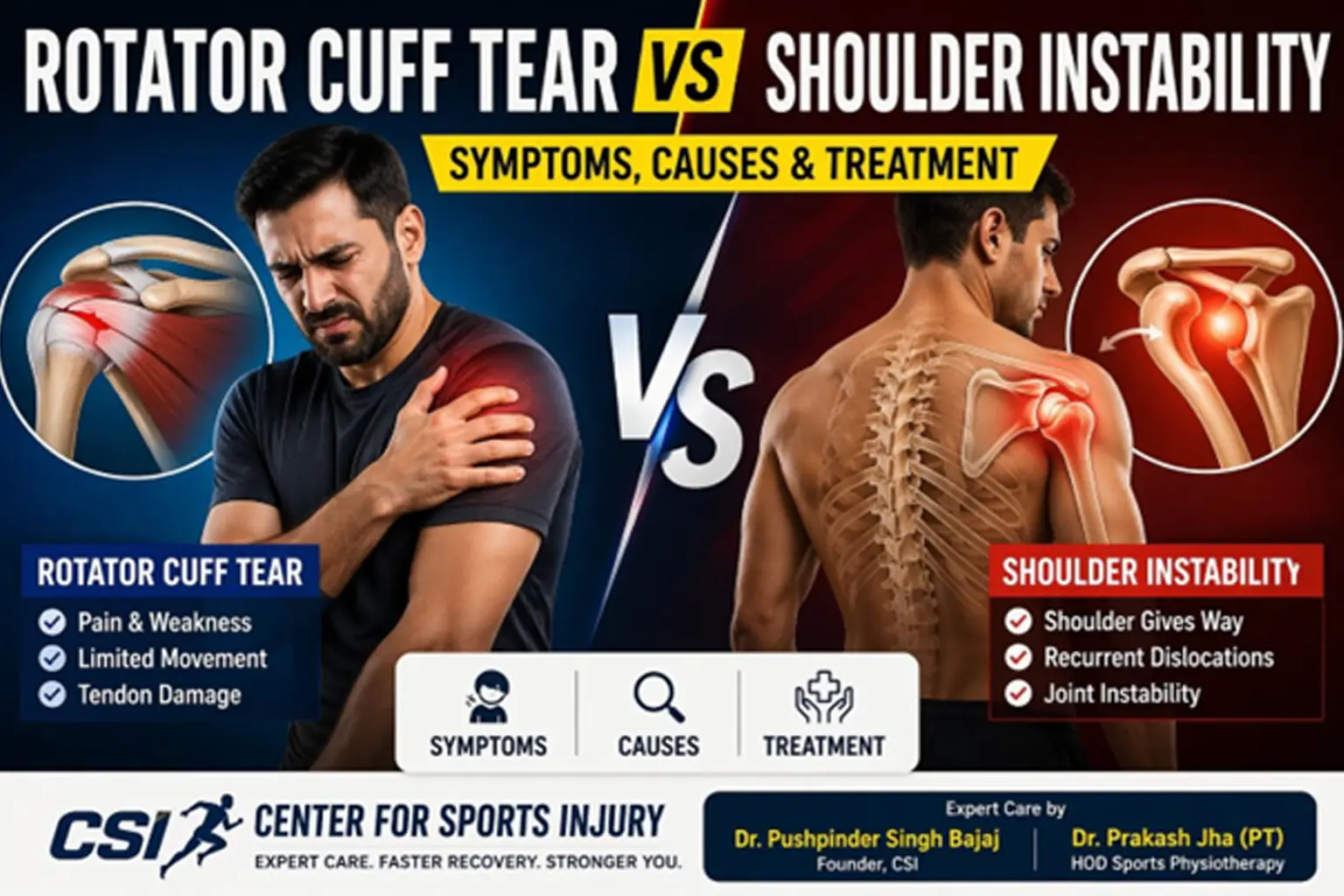
Shoulder injuries are extremely common in athletes, fitness enthusiasts, and even individuals with sedentary lifestyles. However, not all shoulder pain is the same. Two frequently confused conditions—rotator cuff tears and shoulder instability—require very different approaches to diagnosis and treatment.
At the Center for Sports Injury (CSI), under the leadership of Dr. Pushpinder Singh Bajaj (Founder) and Dr. Prakash Jha (PT), HOD Sports Physiotherapy, a patient- centered, evidence-based approach ensures accurate diagnosis and optimal recovery outcomes.
Understanding Shoulder Anatomy
The shoulder is a highly mobile joint made up of muscles, tendons, and ligaments that work together to provide stability and movement.
- The rotator cuff consists of four muscles and tendons that stabilize and move the
- The shoulder joint capsule and ligaments maintain stability by keeping the joint in
When either structure is compromised, it leads to pain, weakness, or instability.
What is a Rotator Cuff Tear?
A rotator cuff tear occurs when one or more of the rotator cuff tendons are partially or completely torn.
Common Symptoms
- Persistent shoulder pain (especially at night)
- Weakness when lifting or rotating the arm
- Limited range of motion
- Difficulty performing overhead activities
Causes
- Acute injury (fall, lifting a heavy weight suddenly)
- Repetitive overhead movements (sports like cricket, tennis, swimming)
- Age-related degeneration
What is Shoulder Instability?
Shoulder instability happens when the shoulder joint becomes loose and slips partially or completely out of place (subluxation or dislocation).
Common Symptoms
- A feeling of the shoulder “giving "
- Recurrent dislocations
- Pain during certain movements
- Clicking or popping sensation
Causes
- Traumatic injury (sports collision, fall)
- Ligament laxity (loose ligaments)
- Previous dislocations increase the recurrence risk
Key Differences: Rotator Cuff Tear vs Shoulder Instability
| Feature | Rotator Cuff Tear | Shoulder Instability |
| Pain Type | Constant, aching | Sudden or movement-related |
| Weakness | Significant | May or may not be present |
| Stability | Usually a stable joint | Unstable or loose joint |
| Common Age Group | Older adults, athletes | Younger athletes |
| Main Issue | Tendon damage | Joint instability |
Diagnosis: Why Accurate Evaluation Matters
At CSI, diagnosis is not based on symptoms alone. A combination of:
- Detailed clinical examination
- Functional movement assessment
- Imaging (MRI, Ultrasound, X-ray)
is used to distinguish between the two conditions.
Dr. Prakash Jha (PT) emphasizes movement-based assessment to identify biomechanical issues that often go unnoticed in routine evaluations.
Treatment Options
1. Non-Surgical Treatment
Most patients benefit from conservative management, especially when diagnosed early.
For Rotator Cuff Tears:
- Physiotherapy and strengthening exercises
- Pain management techniques
- Activity modification
For Shoulder Instability:
- Stability-focused rehabilitation
- Muscle strengthening (rotator cuff + scapular muscles)
- Proprioception and neuromuscular training
2. Advanced Physiotherapy Approach at CSI
At the Center for Sports Injury, treatment protocols are
- Evidence-based (E-E-A-T aligned)
- Customized for each patient
- Focused on long-term recovery and performance
Programs include:
- Manual therapy
- Sports-specific rehabilitation
- Functional training
3. Surgical Intervention (When Needed)
Surgery may be recommended if:
- There is a complete rotator cuff tear
- Shoulder dislocations are recurrent
- Conservative treatment fails
Post-surgical rehabilitation is crucial and is carefully supervised by the physiotherapy team.
Recovery Timeline
- Mild injuries: 4–6 weeks
- Moderate injuries: 8–12 weeks
- Post-surgical rehab: 3–6 months
Recovery depends on early diagnosis, adherence to rehab, and guided physiotherapy.
Prevention Tips
- Warm up before sports or workouts
- Strengthen shoulder and scapular muscles
- Avoid repetitive strain without rest
- Maintain proper posture
- Seek early treatment for minor discomfort
Expert Insight from CSI
According to Dr. Pushpinder Singh Bajaj, founder of CSI:
"Accurate diagnosis is the foundation of successful treatment. Misinterpreting shoulder instability as a rotator cuff injury—or vice versa—can delay recovery and worsen outcomes."
Dr. Prakash Jha (PT), HOD Sports Physiotherapy, adds:
"Rehabilitation is not just about pain relief—it’s about restoring function, strength, and
confidence in movement."
When Should You See a Specialist?
Consult a sports injury expert if you experience:
- Persistent shoulder pain lasting more than 1–2 weeks
- Repeated shoulder dislocations
- Weakness affecting daily activities
- Limited range of motion
Early intervention leads to faster and more effective recovery.
Conclusion
While rotator cuff tears and shoulder instability may present with similar symptoms, they are fundamentally different conditions requiring distinct treatment approaches.
At the Center for Sports Injury (CSI), a combination of expert clinical evaluation, advanced physiotherapy, and personalized care ensures optimal outcomes for every patient.
If you're experiencing shoulder pain or instability, a timely consultation can make all the difference in your recovery journey.
Book your consultation today at the Center for Sports Injury and take the first step toward pain-free movement.