
Shoulder Dislocation: Immediate First Aid and Long-Term Rehabilitation Guide
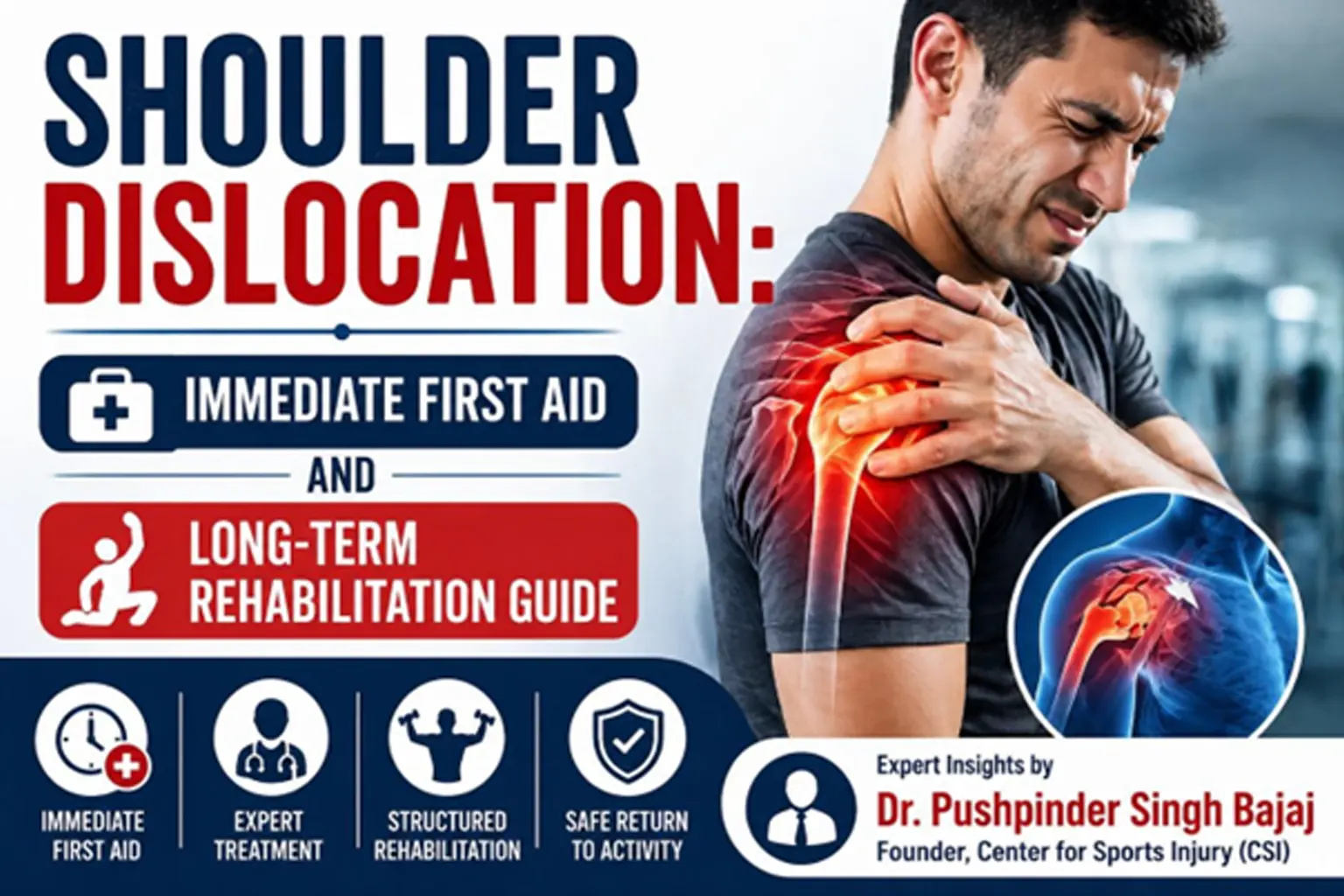
Shoulder dislocation is one of the most common joint injuries, especially among athletes and physically active individuals. Whether it occurs during sports, a fall, or an accident, proper immediate care and structured rehabilitation are critical for full recovery and preventing recurrence.
At the Center for Sports Injury (CSI), under the guidance of Dr. Pushpinder Singh Bajaj, patients receive evidence-based care designed to restore function, stability, and performance.
What is a Shoulder Dislocation?
A shoulder dislocation occurs when the upper arm bone (humerus) is forced out of the shoulder socket (glenoid). The shoulder joint is highly mobile, which also makes it more prone to instability and dislocation.
Types of Shoulder Dislocation
- Anterior dislocation (most common) – arm moves forward out of the socket
- Posterior dislocation – rare, often due to trauma or seizures
- Inferior dislocation – uncommon but severe
Immediate First Aid for Shoulder Dislocation
Quick and correct first aid can significantly reduce complications.
1. Do Not Attempt to Relocate the Shoulder
Trying to push the joint back can cause further damage to nerves, blood vessels, or surrounding tissues.
2. Immobilize the Arm
- Use a sling or cloth to keep the arm still
- Keep the shoulder in a comfortable position
3. Apply Ice Packs
- Apply for 15–20 minutes
- Helps reduce swelling and pain
4. Seek Immediate Medical Attention
Prompt evaluation ensures safe relocation and checks for associated injuries like fractures or ligament tears.
Clinical Treatment Approach at CSI
At CSI, treatment is guided by clinical expertise and advanced diagnostics.
Closed Reduction
A trained specialist carefully repositions the shoulder joint.
Pain Management
Medication and controlled techniques are used to minimize discomfort.
Imaging Evaluation
- rays or MRI scans help assess the following:
- Soft tissue damage
- Labral tears
- Rotator cuff involvement
Important Clinical Considerations
-
Shoulder Immobilization:
After a confirmed reduction, the shoulder is typically immobilized using a sling or shoulder immobilizer for approximately 3 weeks to allow soft tissue healing.
Physiotherapy is initiated after this immobilization phase, progressing gradually based on pain and stability.
-
Caution in Associated Fractures:
Closed reduction in emergency settings is avoided in cases where shoulder dislocation is associated with proximal humerus fractures, as forceful manipulation may lead to iatrogenic neurovascular injury. Such cases require careful imaging and specialist-led management.
Long-Term Rehabilitation: The Key to Full Recovery
Rehabilitation is not optional—it’s essential. Poor rehab is the leading cause of repeated
dislocations.
Phase 1: Protection & Pain Control (0–2 Weeks)
- Sling immobilization
- Gentle passive movements
- Pain and inflammation management
Phase 2: Mobility Restoration (2–6 Weeks)
- Gradual range-of-motion exercises
- Avoiding excessive strain
Phase 3: Strengthening (6–12 Weeks)
- Rotator cuff strengthening
- Scapular stability exercises
- Resistance training
Phase 4: Return to Activity (3+ Months)
- Sport-specific training
- Functional movement correction
- Gradual return to play
Why Rehabilitation Matters
Without proper rehab:
- Risk of recurrent dislocation increases
- Shoulder may remain unstable
- Long-term performance declines
According to experts at CSI, structured rehabilitation significantly improves outcomes and reduces re-injury risk.
When is surgery needed?
Surgery may be recommended if:
- Recurrent dislocations occur
- There is significant ligament or labral damage
- The patient is a high-performance athlete
Procedures aim to restore stability and prevent future dislocations.
Prevention Tips for Shoulder Dislocation
- Strengthen shoulder and rotator cuff muscles
- Maintain flexibility and mobility
- Use proper sports techniques
- Avoid high-risk movements during recovery
Expert Insight
As emphasized by Dr. Pushpinder Singh Bajaj,
"Early management combined with structured rehabilitation is the cornerstone of successful recovery from shoulder dislocation. Ignoring rehab often leads to chronic instability."
Conclusion
Shoulder dislocation is a serious but manageable injury when treated correctly. Immediate first aid, timely medical care, and a well-planned rehabilitation program are essential for complete recovery.
At the Center for Sports Injury (CSI), patients benefit from expert-led, evidence-based treatment designed to restore strength, stability, and confidence—helping them safely return to their active lifestyles.
Looking for the Best Shoulder Dislocation Treatment in Delhi NCR? Contact Center for Sports Injury