

Virat Kohli Knee Injury: Understanding Patellar Tendon Problems in Athletes | Center for Sports Injury
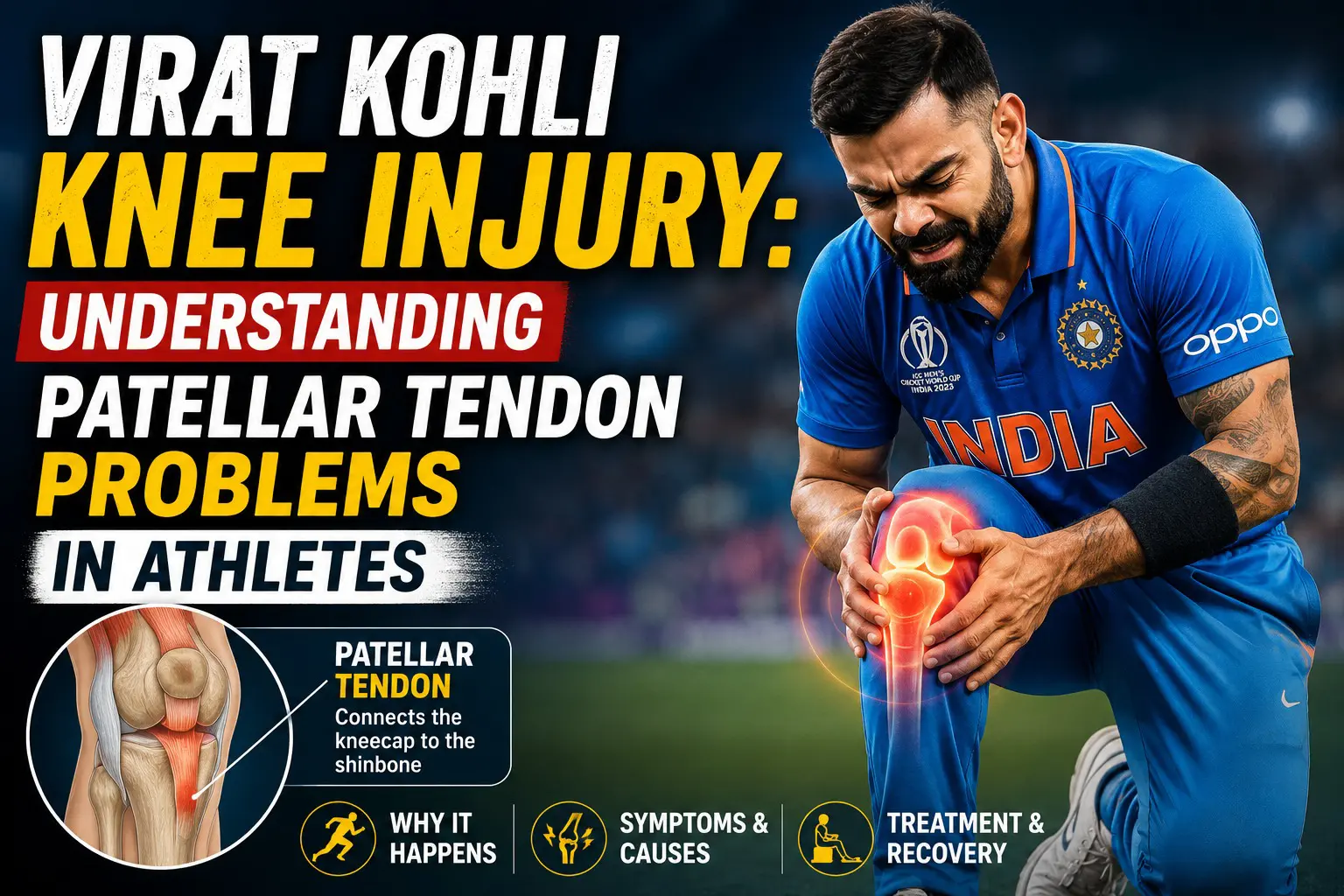
Recently, fans noticed Virat Kohli practicing and batting with visible support around his knee during IPL sessions. It immediately sparked discussions about whether he was dealing with another sports injury. For professional athletes, especially cricketers who spend years training at high intensity, knee problems are not unusual.
Virat Kohli has reportedly dealt with knee discomfort since an old twisting incident during bowling many years ago. While the exact medical details are not publicly confirmed, sports experts often associate repeated athletic stress with a condition called patellar tendinopathy.
This condition is common in athletes whose knees absorb repeated impact over long periods.
Quick Summary
- Patellar tendinopathy affects the tendon below the
- Cricketers can develop it from repeated stress and explosive
- Knee straps may help reduce strain during
- Physiotherapy and strengthening exercises are key
- Most athletes recover well with proper
Why the Knee Handles So Much Stress
The knee is not a simple hinge joint. It is a highly active structure that supports movement, balance, speed, and power.
Inside the knee are several important parts:
- Meniscus, which cushions impact
- ACL and PCL ligaments for stability
- LCL on the outer side of the knee
- Patellar tendon connecting the kneecap to the shinbone
The patellar tendon plays a major role whenever an athlete jumps, sprints, lunges, or suddenly changes direction. Over years of training and competition, this tendon may begin to experience tiny wear-related damage.
That repeated strain can eventually lead to chronic irritation.
What Is Patellar Tendinopathy?
Patellar tendinopathy is a long-term tendon condition affecting the front of the knee, just below the kneecap. Many people know it as jumper’s knee because it is frequently seen in athletes.
Unlike a sudden ligament tear, this problem usually develops gradually. Tiny microscopic damage builds up inside the tendon faster than the body can fully repair it.
Professional cricket demands constant explosive movement:
- quick sprints between wickets
- sudden turning while fielding
- intense gym training
- repeated pressure on the knee joint
Over time, these movements may overload the tendon and trigger pain.
Symptoms Athletes Often Experience
Early symptoms are easy to ignore. Many athletes continue playing until discomfort starts affecting performance.
Common signs include:
- Pain below the kneecap
- Tightness around the knee
- Discomfort while sprinting
- Pain during squats
- Tenderness after training
- Weakness during explosive movement
In chronic cases, stiffness may continue even after rest.
Why Athletes Use Knee Straps
Many professional players wear knee straps during training or matches. Virat Kohli’s strapped knee caught attention for the same reason.
A patellar strap helps by reducing direct stress on the tendon during movement. It changes how force travels across the knee and provides additional support during running or jumping activities.
It does not permanently heal the condition, but it may help athletes stay more comfortable during activity.
Treatment Options for Patellar Tendon Injuries
Treatment usually focuses on improving strength, reducing tendon overload, and helping the athlete return safely to sports.
Physiotherapy
Physiotherapy remains one of the most effective treatments. Rehabilitation programs often include:
- mobility exercises
- stretching routines
- balance training
- gradual strengthening
Strength Training
Weighted squats and controlled resistance exercises are widely used to improve tendon strength and knee stability. These exercises help the tendon adapt better to physical stress over time.
Other Medical Treatments
Depending on symptoms, specialists may recommend:
- PRP injections
- prolotherapy
- anti-inflammatory treatment
- sports rehabilitation programs
Surgery is generally considered only when symptoms remain severe despite long-term conservative treatment.
Recovery Requires Patience
Tendon injuries rarely improve overnight. Recovery usually happens gradually through consistent rehabilitation and controlled training.
The encouraging part is that many athletes successfully return to peak performance after managing this condition properly. Virat Kohli continuing to perform at the highest level shows how disciplined recovery, strength training, and proper sports medicine support can help athletes stay competitive.
Because sometimes greatness is not just about scoring centuries. Sometimes it is simply showing up, strapping the knee, and still facing the next ball.
FAQs
1. What causes patellar tendinopathy in athletes?
Repeated stress from running, jumping, and explosive movements can overload the patellar tendon over time.
2. How do knee straps support tendon injuries?
Knee straps help reduce pressure on the tendon and provide additional support during movement.
3. Can cricketers continue playing with knee tendon pain?
Many athletes continue playing while managing symptoms through rehabilitation and strengthening exercises.
4. Are weighted squats useful for tendon recovery?
Yes, controlled strength training can help improve tendon capacity and support knee stability.
5. When is surgery needed for patellar tendon injuries?
Surgery is usually considered only in severe cases that do not improve with rehabilitation or non-surgical treatment.