Comprehensive Pediatric Orthopedic Care in Delhi for Children and Adolescents
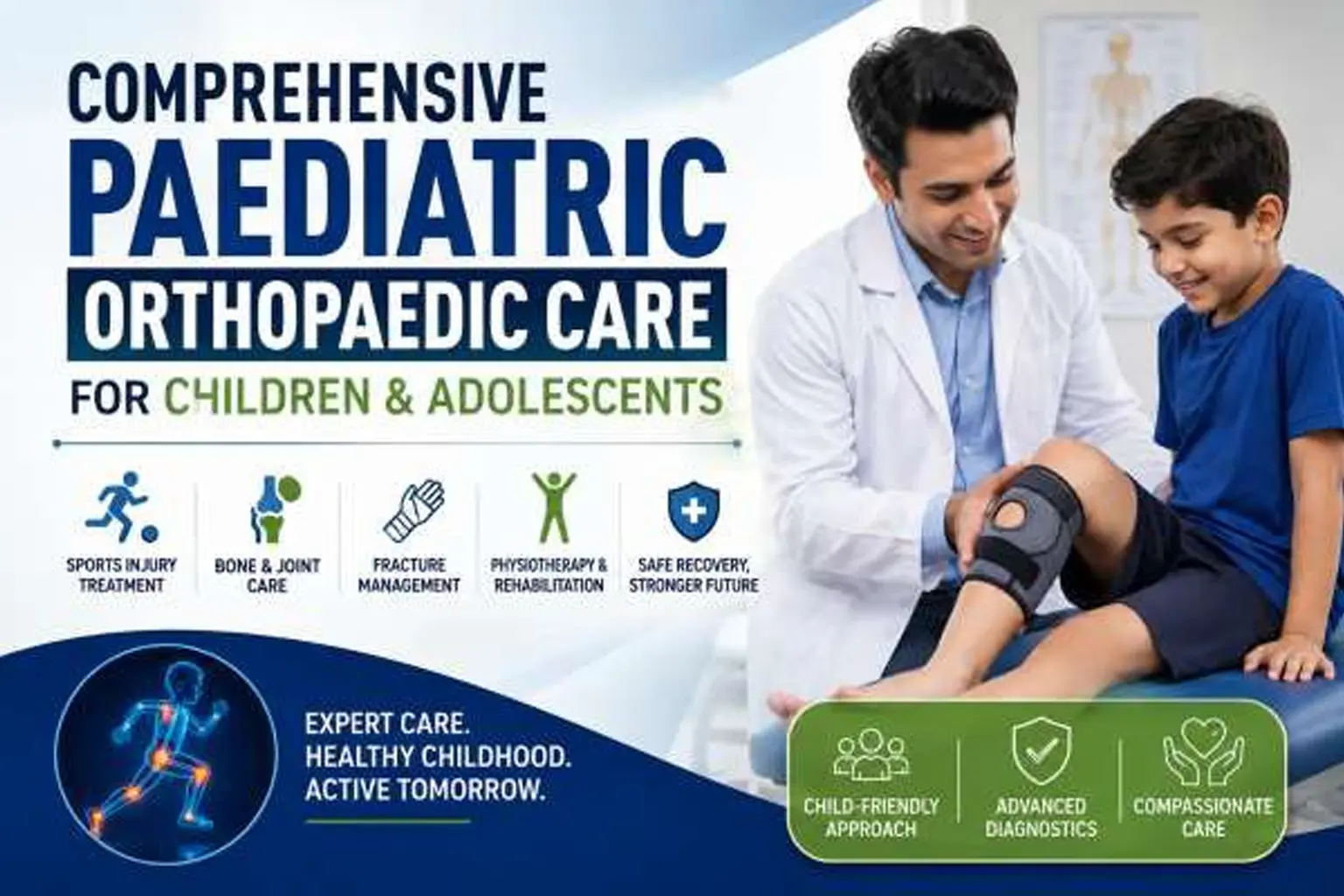
Children and adolescents are constantly growing, moving, and developing new physical skills. From running and playing sports to everyday activities, their bones, joints, muscles, and ligaments experience considerable stress. Most childhood injuries are minor and heal well, but persistent pain, repeated injuries, unusual movement patterns, or significant trauma should not be ignored.
Paediatric orthopaedic care focuses on evaluating and managing musculoskeletal problems in infants, children and adolescents while taking their age, growth and activity level into consideration.
At the Center for Sports Injury (CSI) in South Delhi, orthopaedic and sports medicine services are supported by diagnostic imaging, physiotherapy, and rehabilitation facilities
under one roof. CSI describes its approach as a multidisciplinary model involving orthopedic and sports specialists, physiotherapists, and other healthcare professionals.
For families seeking pediatric orthopedic care in Delhi, the goal should be more than simply treating an injury. A proper assessment should also consider the child's growth, functional needs, activity level, and safe return to school, sports, and daily activities.
What Is Pediatric Orthopedic Care?
Paediatric orthopaedics deals with conditions affecting the bones, joints, muscles, ligaments, and other parts of the musculoskeletal system in children and adolescents.
Because children's bodies are still developing, an injury cannot always be approached in exactly the same way as an adult injury. Growth plates, bone development, muscle strength, flexibility, and changing movement patterns may all influence assessment and treatment.
Common concerns may include:
- Childhood fractures and injuries
- Sports-related injuries
- Knee, ankle, and shoulder injuries
- Sprains and ligament injuries
- Muscle and tendon injuries
- Recurrent pain after sports or physical activity
- Growth-related musculoskeletal concerns
- Problems affecting posture, movement, or gait
- Rehabilitation following an orthopedic injury
The appropriate treatment depends on the child's age, symptoms, injury severity, examination findings, and, when necessary, imaging results.
Why Children Need Special Attention After an Orthopedic Injury
A child may not always be able to accurately describe pain or explain how an injury occurred. Younger children may simply stop using an arm or leg, avoid certain activities, or become irritable.
Parents should pay attention to changes such as
- Persistent pain or swelling
- Difficulty walking or running
- Refusal to put weight on a limb
- Reduced range of movement
- Limping
- Repeated sports injuries
- Pain that consistently returns after activity
- Visible deformity following an injury
- Reduced participation in normal activities
- Difficulty returning to sports after an injury
A child who continues to experience symptoms after an injury should be evaluated rather than repeatedly returning to sports without understanding the cause.
Common Sports Injuries in Children and Adolescents
As participation in football, cricket, basketball, badminton, tennis, athletics, and other sports increases, young athletes can experience a wide variety of injuries.
1. Knee Injuries
Knee pain can result from a direct injury, twisting movement, overuse, or problems involving muscles and ligaments. Young athletes with persistent swelling, instability, locking, or pain should receive an appropriate clinical assessment.
Certain ligament injuries, including ACL injuries, can also occur in adolescent athletes. Treatment decisions should be individualized according to the child's age, skeletal maturity, injury pattern, sporting goals, and overall health.
2. Ankle Injuries
Ankle sprains are common in physically active children. Although many recover with appropriate conservative treatment, recurrent sprains or persistent pain may indicate an underlying problem that requires further evaluation.
3. Fractures
Children can sustain fractures from falls, sports, road accidents, and other forms of trauma. Since growing bones have specific characteristics, suspected fractures should be assessed promptly by a qualified medical professional.
4. Shoulder and Upper-Limb Injuries
Young athletes involved in throwing sports, gymnastics, and contact sports may develop shoulder, elbow, or wrist problems. Repetitive movements can sometimes contribute to overuse injuries.
5. Overuse Injuries
Not every sports injury results from one identifiable accident. Repeated training without sufficient recovery can contribute to pain involving bones, joints, muscles, or tendons.
A well-structured training schedule, appropriate technique, adequate rest, and gradual progression can help reduce unnecessary stress on a young athlete's developing body.
When Should Parents Consult a Pediatric Orthopaedic Specialist in Delhi?
A specialist assessment may be appropriate when a child has:
- Persistent pain after an injury
- Significant swelling or bruising
- Difficulty walking or using an arm
- Recurrent injuries
- Joint instability
- Persistent limping
- Pain that repeatedly occurs during sports
- A suspected fracture
- Difficulty returning to normal activity
- Symptoms that do not improve as expected
Urgent medical evaluation is particularly important when there is an obvious deformity, severe pain, loss of function, significant trauma, or other concerning symptoms.
How Is a Child's Orthopaedic Problem Evaluated?
A comprehensive assessment generally begins with a detailed discussion about the child's symptoms, previous injuries, physical activities, and medical history.
The clinician may then evaluate:
- Joint movement
- Muscle strength
- Walking or running pattern
- Swelling and tenderness
- Stability of the affected joint
- Functional limitations
- Mechanism of injury
- Sports participation and training patterns
Depending on the suspected condition, imaging such as X-rays or MRI may be recommended.
At CSI, the clinical approach includes detailed history-taking and physical examination followed by investigations and imaging when required. The center also provides dedicated imaging and physiotherapy services as part of its broader orthopedic and sports medicine setup.
Treatment Options for Pediatric Orthopedic Conditions
Treatment is not automatically surgical. In many cases, children can recover with appropriate non-surgical management.
Depending on the diagnosis, treatment may include:
Activity Modification
Temporarily reducing or modifying activities that aggravate symptoms can allow tissues to recover while maintaining safe movement.
Physiotherapy and Rehabilitation
Age-appropriate physiotherapy can help improve strength, flexibility, balance, coordination, and movement quality. Rehabilitation may also be important when a child is returning to sports after an injury.
Bracing or Immobilization
Certain injuries may require a brace, splint, or cast to support healing and protect the affected area.
Medication
When clinically appropriate, a doctor may recommend medication for pain or inflammation. Parents should avoid giving medicines to children without appropriate medical guidance.
Surgery
Some significant injuries or structural problems may require surgery. The decision should be based on the specific diagnosis, the child's developmental stage, functional requirements, and expected benefits and risks.
The objective should always be to choose the least invasive treatment that is appropriate for the child's condition while protecting long-term function.
The Importance of Rehabilitation and Safe Return to Sports
Recovering from an injury does not necessarily mean that pain has disappeared. A young athlete may need to regain:
- Muscle strength
- Joint mobility
- Balance
- Coordination
- Sport-specific movement
- Confidence
- Endurance
Returning to competitive sport too quickly can increase the risk of another injury. A structured rehabilitation program can help children progressively rebuild their physical capacity before returning to full sporting activity.
CSI's sports medicine model includes individualized treatment, exercise programs, and rehabilitation aimed at recovery and prevention of further injury.
Preventing Orthopaedic Injuries in Young Athletes
Parents, coaches, and young athletes can work together to create safer sporting habits. Important measures include:
- Start every training session with an appropriate warm-
- Increase training intensity
- Use suitable footwear and protective
- Teach correct sports
- Allow adequate recovery between demanding
- Encourage hydration and balanced
- Do not encourage children to play through significant
- Address recurring pain or injuries instead of repeatedly ignoring
- Include age-appropriate strength, mobility, and conditioning
- Follow medical and rehabilitation advice after an
A Multidisciplinary Approach to Children's Orthopaedic Care
Children with sports injuries may benefit from coordinated care rather than treatment of the injury in isolation.
Orthopaedic evaluation, diagnostic imaging, physiotherapy, and rehabilitation can work together to create a more complete recovery pathway.
The Center for Sports Injury in South Delhi brings orthopedic surgery, sports medicine, imaging, and physiotherapy services together in one facility.
The center is led by Dr. Pushpinder Singh Bajaj, senior consultant in orthopaedics, joint replacement, sports medicine, and arthroscopic surgery and the founder of CSI. His professional background includes orthopedic training and fellowships in the UK, Germany, and Australia, along with extensive experience in sports medicine and arthroscopic surgery.
For families considering care at CSI, the child's specific condition should be assessed individually to determine the most appropriate specialist, investigations, and treatment pathway.
Why Choose the Center for Sports Injury in Delhi?
When selecting children's orthopedic care in Delhi, families should look for a facility that can provide proper clinical assessment, appropriate diagnostics, and rehabilitation support.
CSI offers:
- Orthopaedic and sports medicine expertise
- Diagnostic imaging facilities
- Physiotherapy and rehabilitation support
- A multidisciplinary approach
- Individualized treatment planning
- Sports injury management
- Orthopaedic care under one roof
CSI is located at B-5/4, Safdarjung Enclave, New Delhi, and its official website lists the center's contact number as 011 4122 3333.
Frequently Asked Questions About Pediatric Orthopedic Care
1. What does a pediatric orthopedic specialist treat?
A paediatric orthopaedic specialist evaluates musculoskeletal problems affecting children and adolescents, including fractures, sports injuries, joint problems, movement concerns and other conditions involving bones, muscles, ligaments and joints.
2. When should I take my child to an orthopedic doctor?
Consider an orthopedic consultation when your child has persistent pain, swelling, limping, difficulty using a limb, recurrent sports injuries, joint instability, or symptoms that do not improve as expected after an injury.
3. Are sports injuries common in children?
Yes. Children and adolescents participating in sports can experience acute injuries such as sprains and fractures as well as overuse injuries caused by repetitive physical activity.
4. Can children suffer from ACL injuries?
Yes. ACL injuries can occur in adolescent athletes, particularly during sports involving cutting, pivoting, jumping, and rapid changes in direction. Diagnosis and treatment should be individualized according to the child's age, skeletal maturity, and injury.
5. Does every childhood orthopedic injury require surgery?
No. Many injuries can be managed with rest or activity modification, immobilization, physiotherapy, and rehabilitation. Surgery is considered only when clinically appropriate.
6. How long does it take for a child to recover from a sports injury?
Recovery time varies considerably depending on the type and severity of the injury, the child's age, the treatment method, and the rehabilitation progress. A healthcare professional can provide a more meaningful timeline after evaluating the child.
7. How can parents prevent sports injuries in children?
Parents can encourage proper warm-ups, suitable protective equipment, correct technique, gradual training progression, adequate rest, and prompt evaluation of persistent pain or recurrent injuries.
8. Where can I seek pediatric orthopedic care in Delhi?
Families in Delhi can consult an appropriate orthopedic or sports medicine specialist based on the child's condition. The Center for Sports Injury in Safdarjung Enclave, New Delhi, provides orthopedic, sports medicine, imaging, and physiotherapy services under one roof.
Conclusion
Children and adolescents deserve orthopedic care that considers both their current injury and their developing bodies. Whether the concern is a fracture, sports injury, recurring pain, or difficulty returning to physical activity, timely evaluation can help identify the problem and guide an appropriate treatment plan.
For families looking for pediatric orthopedic care in Delhi, the right approach involves accurate diagnosis, age-appropriate treatment, rehabilitation, and careful progression back to normal activities.
At the Center for Sports Injury in South Delhi, orthopedic and sports medicine services are supported by diagnostic imaging and rehabilitation facilities. Under the leadership of Dr. Pushpinder Singh Bajaj, the center follows a multidisciplinary approach to orthopedic and sports-related care.
Medical Disclaimer: This article is intended for general educational purposes and should not replace an in-person medical assessment. Children with significant trauma, severe pain, deformity, inability to bear weight, or persistent symptoms should be evaluated promptly by an appropriate healthcare professional.