

Frozen Shoulder: Symptoms, Causes, Diagnosis, Treatment
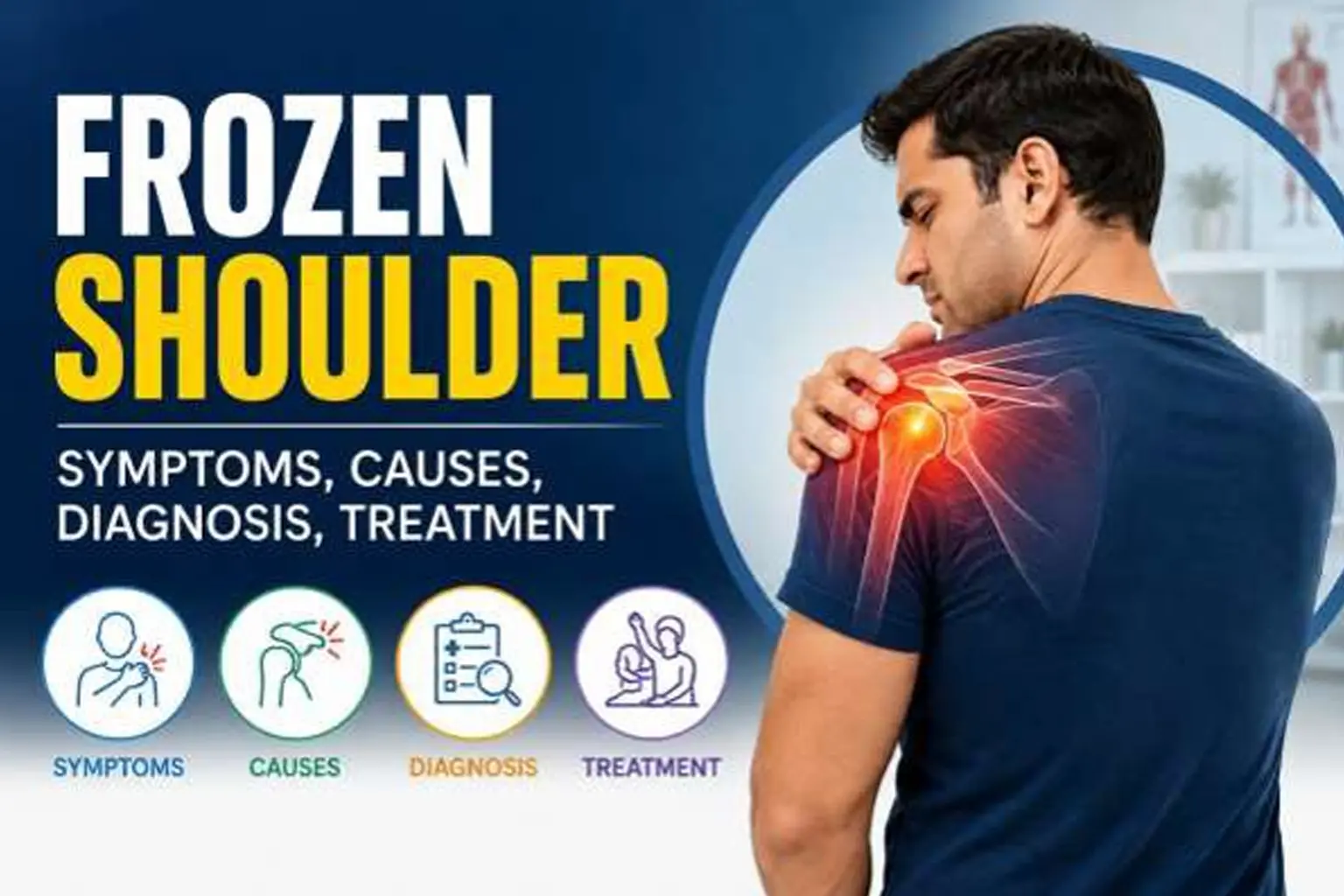
Frozen shoulder, medically known as adhesive capsulitis, is a condition that causes pain, stiffness, and difficulty moving the shoulder. Simple activities such as dressing, reaching overhead, combing your hair, or reaching behind your back can become uncomfortable or difficult.
The condition usually develops gradually and may take months to improve. With the right diagnosis and treatment plan, most people can gradually regain shoulder movement and function.
What Is Frozen Shoulder?
Frozen shoulder occurs when the capsule surrounding the shoulder joint becomes inflamed, thickened, and tight. This reduces the space available for normal shoulder movement and causes increasing stiffness.
Unlike a temporary muscle strain, frozen shoulder can significantly restrict the shoulder's range of motion. It is also called adhesive capsulitis.
Frozen shoulder can develop without an obvious injury, although it may also occur after a shoulder injury, surgery, or a period when the arm has been kept still.
Frozen Shoulder Symptoms
The symptoms usually develop gradually rather than appearing suddenly. Common symptoms include:
- Persistent shoulder pain, particularly at night
- Increasing stiffness in the shoulder
- Difficulty raising the arm
- Trouble reaching behind your back
- Difficulty putting on clothes or reaching overhead
- Reduced shoulder movement during everyday activities
- Pain that may extend toward the upper arm
In many patients, stiffness becomes the main problem as the condition progresses.
Causes and Risk Factors of Frozen Shoulder
In some cases, there is no clear reason why frozen shoulder develops. This is known as
primary or idiopathic frozen shoulder.
It can also occur following another condition or event, which is called secondary frozen shoulder.
Factors associated with a higher risk include:
- Diabetes
- Thyroid disorders
- Previous shoulder injury or surgery
- Prolonged shoulder immobilisation
- Certain conditions affecting shoulder movement
Having a risk factor does not mean that a person will definitely develop frozen shoulder.
Stages of Frozen Shoulder & Timeline
1. Freezing Stage – 2 to 9 Months
Pain gradually increases and shoulder movement becomes restricted. Treatment focuses mainly on pain control and gentle mobility.
2. Frozen Stage – 4 to 12 Months
Pain may reduce, but stiffness becomes more prominent. Physiotherapy focuses on gradually improving range of motion.
3. Thawing Stage – 4 to 12 Months or Longer
Shoulder movement gradually returns, with exercises progressing toward normal function and strength.
Note: These timelines are approximate. Recovery varies from person to person and may take more than a year in some cases.
Physiotherapy Treatment for Frozen Shoulder
Physiotherapy can help reduce pain, improve shoulder mobility, and restore function. Treatment is tailored according to the stage and severity of frozen shoulder.
- Manual Therapy: Gentle joint mobilisation to reduce stiffness and improve
- Myofascial Release: Helps release tight muscles and surrounding soft
- Class 3 LASER: May be used as an additional therapy for pain
- Ultrasonic Therapy: Can be used as an adjunct to help manage pain and tissue
- Muscle Energy Technique (MET): Controlled muscle contractions may help improve flexibility and joint movement.
- Exercise Therapy: Includes gentle stretching, range-of-motion exercises, assisted movements, and strengthening as mobility improves.
How Is Frozen Shoulder Diagnosed?
A doctor usually diagnoses frozen shoulder based on your symptoms, medical history, and a physical examination.
During the examination, the doctor may check:
- How far you can move your shoulder yourself
- How much movement is possible when the shoulder is moved with assistance
- Where you experience pain or stiffness
- Whether another shoulder condition could be causing your symptoms
Imaging tests such as an X-ray may be recommended to rule out conditions such as arthritis or other causes of shoulder pain. An ultrasound or MRI may sometimes be used when another problem, such as a rotator cuff injury, needs to be investigated.
Frozen Shoulder Treatment
Treatment depends on the severity of symptoms, the stage of the condition, and how much your shoulder movement is affected.
Pain Relief and Activity Modification
Your doctor may recommend appropriate pain-relieving medication and advise you to modify activities that aggravate your symptoms.
Complete immobilisation is generally not helpful because prolonged lack of movement can contribute to stiffness.
Physiotherapy for Frozen Shoulder
Physiotherapy is an important part of frozen shoulder treatment. A physiotherapist can develop a programme aimed at gradually improving shoulder movement and reducing stiffness.
Treatment may include:
- Gentle stretching
- Range-of-motion exercises
- Shoulder mobility exercises
- Gradual strengthening when appropriate
- Advice on posture and daily activities
Exercises should be performed within a tolerable range. Forcing a stiff shoulder aggressively can increase pain and may make rehabilitation more difficult.
Frozen Shoulder Exercises
Depending on your condition, a physiotherapist may recommend gentle exercises such as:
- Pendulum exercises
- Assisted shoulder elevation
- Towel stretches
- External rotation stretches
- Wall-walking exercises
The right exercises and their intensity depend on the stage of frozen shoulder and your individual symptoms. It is better to follow a structured programme rather than repeatedly exercising through significant pain.
Steroid Injections
A corticosteroid injection may be considered, particularly when pain is limiting shoulder movement and rehabilitation.
Steroid injections can provide short-term pain relief for some patients and may make it easier to participate in physiotherapy. Your orthopaedic specialist can determine whether an injection is appropriate for you.
Hydrodilatation
Hydrodilatation, sometimes called shoulder distension, involves injecting sterile fluid into the shoulder joint capsule. The aim is to stretch the tight capsule and improve movement.
It may be considered when stiffness remains significant despite initial treatment. The suitability and expected benefit can vary between patients.
Surgery for Frozen Shoulder
Most patients do not need surgery. However, if significant stiffness and symptoms persist despite appropriate non-surgical treatment, an orthopaedic specialist may discuss surgical options.
Procedures such as manipulation under anaesthesia (MUA) or arthroscopic capsular release may be considered in selected cases.
Arthroscopic capsular release uses a small camera and instruments to release parts of the tight joint capsule. The decision to undergo surgery depends on factors such as symptom severity, duration, previous treatment, and overall health.
Frozen Shoulder Recovery
Recovery from frozen shoulder is often gradual. Some people improve within months, while others may experience symptoms for longer.
Following your rehabilitation programme and maintaining appropriate shoulder movement can be important during recovery. Your doctor or physiotherapist can also guide you on when to progress from mobility exercises to strengthening.
If you have diabetes or another underlying condition associated with frozen shoulder, managing that condition appropriately may also be part of your overall care.
When Should You See a doctor?
Consider getting your shoulder evaluated if:
- Shoulder pain continues for several weeks
- Your shoulder movement is progressively decreasing
- You have difficulty performing everyday activities
- Night pain is affecting your sleep
- Shoulder stiffness develops after an injury or surgery
- Home exercises are not improving your symptoms
Seek prompt medical attention after a significant injury, particularly if you suddenly cannot move your arm or have severe pain, swelling, or deformity.
Frequently Asked Questions About Frozen Shoulder
1. How long does frozen shoulder last?
Frozen shoulder can last for several months and, in some people, longer. Recovery varies depending on the individual, severity, and treatment.
2. Can frozen shoulder heal on its own?
Frozen shoulder may gradually improve over time, but recovery can be slow. Appropriate treatment and physiotherapy may help manage pain and restore movement.
3. Is frozen shoulder very painful?
Pain varies between individuals. It may be worse during the early stage and can become particularly noticeable at night. As the condition progresses, stiffness may become the dominant symptom.
4. Can physiotherapy cure frozen shoulder?
Physiotherapy is an important treatment for improving shoulder movement and function. The response varies from person to person, and treatment should be tailored to the individual's condition.
5. Are injections useful for frozen shoulder?
A corticosteroid injection may help reduce pain and improve movement in some patients, particularly during the earlier stages. A doctor can assess whether it is suitable for you.
6. Is hydrodilatation better than physiotherapy?
Hydrodilatation and physiotherapy serve different purposes and may sometimes be used as part of a broader treatment plan. The appropriate approach depends on your symptoms and response to initial treatment.
7. Does frozen shoulder require surgery?
Usually, surgery is not the first treatment. Surgery may be considered when significant symptoms and stiffness continue despite appropriate non-surgical treatment.
8. Can frozen shoulder happen again?
Frozen shoulder can occur again, although recurrence in the same shoulder is considered uncommon. It may also affect the other shoulder, particularly in people with certain risk factors.
Get Your Shoulder Evaluated at Center for Sports Injury
Persistent shoulder pain and stiffness should not simply be ignored, especially when they interfere with sleep, work, exercise, or daily activities. Frozen shoulder can resemble other shoulder problems, so getting the correct diagnosis is an important first step.
At Center for Sports Injury, patients can undergo an appropriate clinical evaluation to understand the cause of their shoulder symptoms and discuss suitable treatment options. If your shoulder movement is becoming increasingly restricted, consider seeking professional orthopaedic evaluation rather than continuing to push through the pain.