

Joint Pain in Winter: Why It Gets Worse in Delhi and What Helps
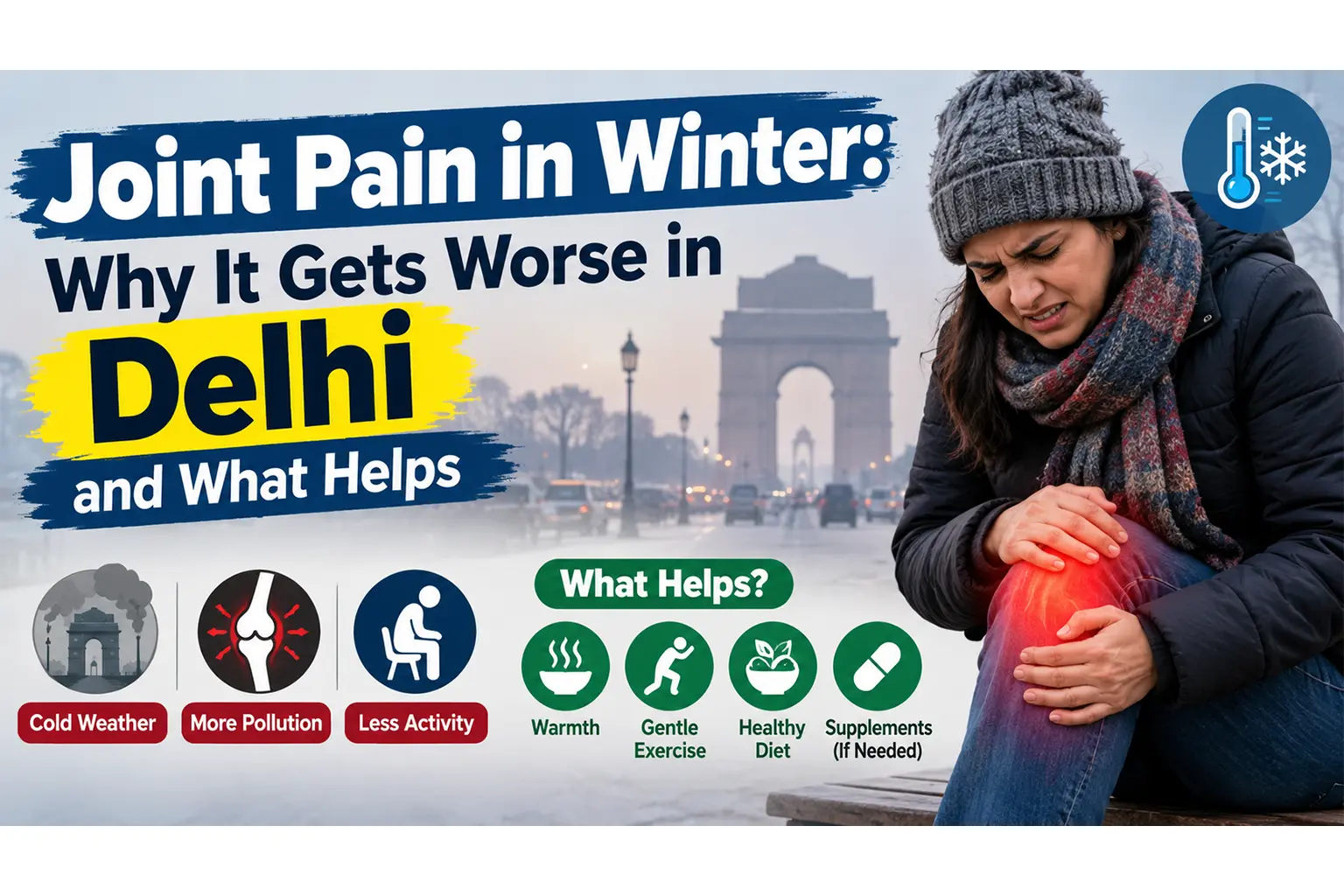
As Delhi turns colder from November, many people notice that joint pain in winter feels sharper and stiffer than in other months. This guide explains why joint pain in cold weather happens, what you can do at home, and when to see an orthopaedic doctor.
Why Does Joint Pain Get Worse in Winter?
The exact cause is not fully understood, but doctors commonly discuss these factors:
- Lower air pressure: A fall in barometric pressure may let tissues around a joint swell slightly, irritating sensitive
- Tighter muscles and tendons: Cold can stiffen muscles, which strains joints during the first movements of the day.
- Less activity: Foggy mornings and early evenings reduce walking, and weaker muscles give joints less support.
- Lower vitamin D: Reduced sun exposure may lower vitamin D levels, which support bone and muscle health.
Research on joint pain in cold weather is mixed, but many patients report real symptoms, and those symptoms deserve attention.
Arthritis in Winter: Who Feels It Most?
Arthritis in winter is a frequent complaint among people with osteoarthritis, rheumatoid arthritis, old sports injuries or earlier joint surgery. Knee pain in winter is the concern we hear most, because knees carry body weight with every step. Pain that appears only in cold weather can still point to an underlying condition, so read our guide on how to identify arthritis vs normal joint pain.
Simple Ways to Ease Joint Pain in Winter
- Layer up: Keep knees, hands and neck covered, especially during early morning
- Warm up first: Spend five to ten minutes on gentle indoor movements before going
- Stay active indoors: Try stationary cycling, yoga or strengthening exercises guided by a physiotherapist at CSI PhysioCare.
- Use gentle heat: A warm bath or heat pack for 15 to 20 minutes may ease Avoid heat on a joint that is swollen, red or hot.
- Check vitamin D: Get tested before taking supplements, and consider a bone health check if you are above 40.
- Manage weight and diet: Extra weight adds load to knees and can worsen knee pain in winter. Eat a balanced diet with calcium and protein; see our nutrition service.
- Prevent falls: Wear non-slip footwear on damp, foggy
- Do not start, stop or change medicines, or rely on painkillers, without medical
These steps can support comfort during joint pain in cold weather, but they do not replace a proper diagnosis for arthritis in winter or any persistent symptom.
Knee Pain in Winter: When to See an Orthopaedic Doctor

Consult a doctor if joint pain in cold weather or any joint pain comes with:
- Pain lasting more than two weeks
- Swelling, redness or warmth around the joint
- Locking, clicking or the knee giving way
- Difficulty climbing stairs or bearing weight
- Night pain, or pain after a fall or injury
- Fever with joint pain (seek care promptly)
Evaluating arthritis in winter usually begins with examination, followed by X-ray, ultrasound or MRI when
needed. CSI offers these through its in-house imaging centre, DiagKnow. Learn when a scan helps in our article on knee MRI in Delhi.
How Joint Pain Is Managed at CSI
Treatment depends on diagnosis, age, activity level and overall health. Options may include physiotherapy, exercise programmes, medicines prescribed by your doctor, injections in selected cases, and surgery only when conservative care is not enough. Our overview of non-surgical pain management explains these approaches. If joint pain in winter or knee pain in winter keeps returning, early evaluation helps identify the cause. Outcomes vary from person to person, and no result can be guaranteed.
Center for Sports Injury was founded by Dr Pushpinder Singh Bajaj, an orthopaedic, arthroscopic and joint replacement surgeon (MS Orthopaedics, DNB Orthopaedics, FIAS UK, AO Fellowship Germany) with training in the UK, Australia and Germany. Read more about our founder.
Frequently Asked Questions
Why is joint pain in cold weather worse in the morning?
Joints stay still overnight and cold air adds to stiffness. A gentle warm-up often helps, but morning stiffness lasting more than 30 minutes should be evaluated.
Does cold weather cause arthritis?
No. Cold weather does not cause arthritis, but it may make existing arthritis in winter feel worse.
Can knee pain in winter be treated without surgery?
Many people improve with physiotherapy, exercise and prescribed medicines, but the right plan depends on your diagnosis.
Disclaimer: This article is for general information only and is not a substitute for medical advice, diagnosis or treatment. Please consult a qualified doctor. To reach CSI, visit the contact page or call 011 4122 3333.