

MCL Injury vs ACL Injury: How to Know the Difference
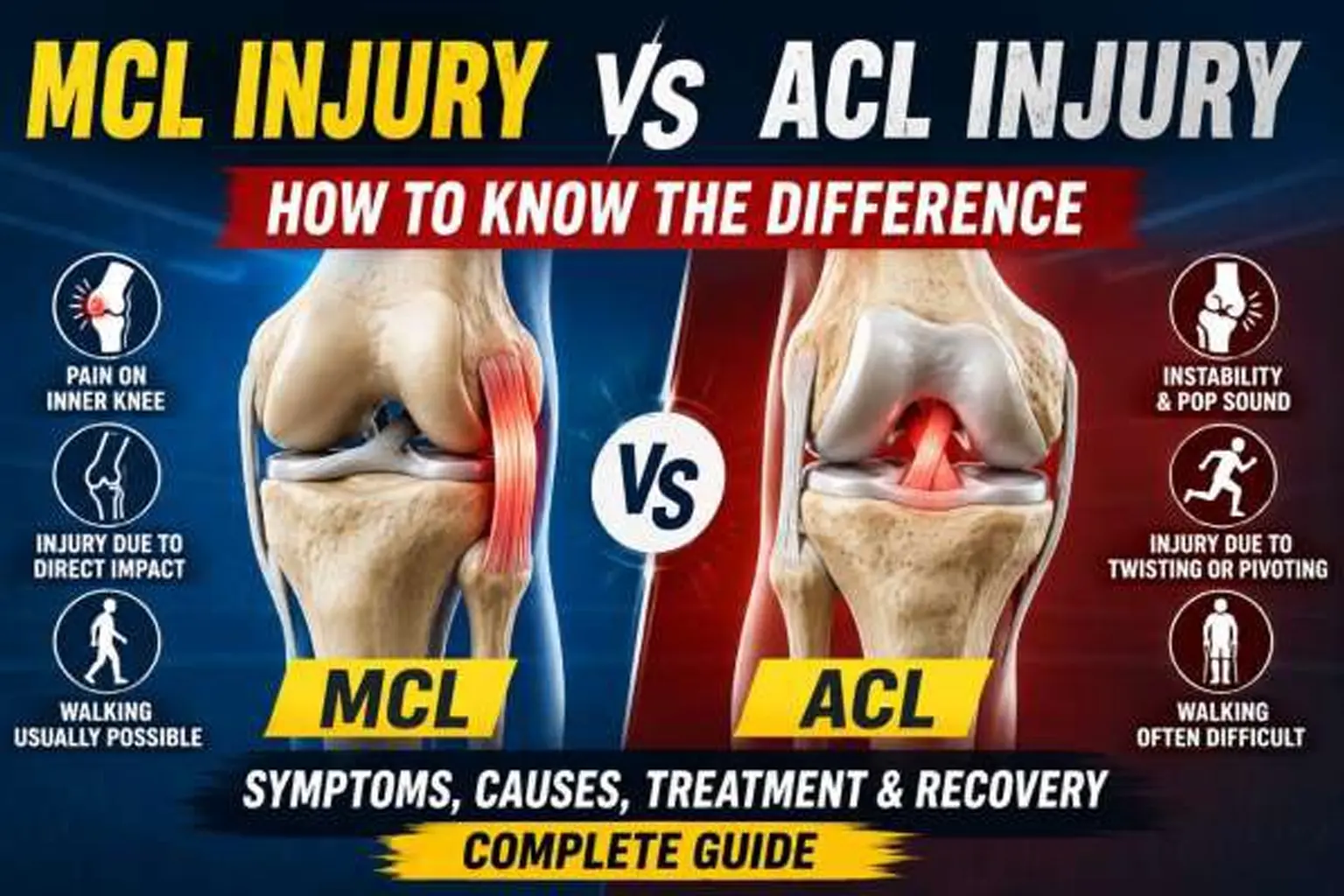
Knee injuries are among the most common orthopedic problems affecting athletes, fitness enthusiasts, and even people performing everyday activities. Two of the most frequently injured knee ligaments are the Medial Collateral Ligament (MCL) and the Anterior Cruciate Ligament (ACL). While both injuries can cause pain, swelling, and instability, they differ significantly in terms of location, symptoms, severity, treatment, and recovery.
Understanding the difference between an MCL and ACL injury can help you seek timely medical attention and prevent long-term complications.
At Center for Sports Injury, Dr. Pushpinder Singh Bajaj, an experienced orthopedic and sports injury specialist, provides evidence-based diagnosis, advanced imaging evaluation,
minimally invasive arthroscopic procedures, ligament reconstruction, and personalized rehabilitation programs for patients suffering from knee ligament injuries.
What Is an MCL Injury?
The Medial Collateral Ligament (MCL) is located on the inner side of the knee. It connects the femur (thigh bone) to the tibia (shin bone) and prevents the knee from bending inward excessively.
An MCL injury usually occurs when a direct blow strikes the outside of the knee, forcing it inward.
Common Causes
- Football injuries
- Cricket injuries
- Wrestling
- Skiing accidents
- Sudden twisting movements
- Road traffic accidents
- Falls
Most MCL injuries are partial tears and often heal without surgery when treated appropriately.
What Is an ACL Injury?
The Anterior Cruciate Ligament (ACL) lies in the center of the knee joint and plays a critical role in stabilizing rotational movements.
ACL injuries commonly occur during sports involving sudden stopping, jumping, pivoting, or rapid changes in direction.
Common Causes
- Landing incorrectly after jumping
- Sudden pivot while running
- Non-contact twisting injury
- Football
- Basketball
- Badminton
- Tennis
- Kabaddi
Unlike many MCL injuries, complete ACL tears usually require surgical reconstruction in physically active individuals.
MCL Injury vs ACL Injury: Quick Comparison
| Feature | MCL Injury | ACL Injury |
| Location | Inner side of knee | Center of knee |
| Cause | Direct blow to outer knee | Twisting or pivoting |
| Pop sound | Rare | Common |
| Knee instability | Mild to moderate | Significant |
| Swelling | Gradual | Rapid |
| Walking | Usually possible | Often difficult |
| Surgery | Rarely needed | Frequently recommended |
| Recovery | 4 - 12 weeks | 6 - 9 months after reconstruction |
MCL Injury Symptoms
Patients with an MCL injury commonly experience the following:
- Pain on the inner side of the knee
- Tenderness along the ligament
- Mild to moderate swelling
- Difficulty turning the knee
- Knee stiffness
- Feeling unstable while walking
- Bruising in severe cases
Symptoms may appear immediately after the injury or develop gradually over several hours.
ACL Injury Symptoms
An ACL injury often presents more dramatically. Typical symptoms include the following:
- A loud "pop" at the time of injury
- Sudden severe pain
- Immediate swelling
- Knee giving way
- Difficulty standing
- Loss of range of motion
- Instability during walking
- Inability to return to sports
Many patients report feeling as though their knee "slipped out."
How Doctors Differentiate Between MCL and ACL Injuries
A proper diagnosis involves much more than simply reviewing symptoms.
At the Center for Sports Injury, evaluation typically includes the following:
Detailed Medical History
The mechanism of injury often provides important clues.
Physical Examination
Specialized ligament stability tests include:
- Valgus Stress Test (for MCL)
- Lachman Test
- Anterior Drawer Test
- Pivot Shift Test
Imaging
Diagnostic imaging may include:
- Digital X-rays
- MRI Scan
- Ultrasound (selected cases)
MRI remains the gold standard for identifying ligament tears and associated cartilage or meniscus injuries.
Can you walk with an ACL or MCL tear?
This is one of the most frequently asked questions.
MCL Tear
Many patients can still walk despite pain and stiffness.
ACL Tear
Some individuals may walk immediately after injury but often experience repeated episodes of knee instability. Continuing sports without treatment increases the risk of meniscus damage and early arthritis.
MCL Injury Treatment
Most isolated MCL injuries respond well to conservative treatment. Treatment may include:
- Rest
- Ice therapy
- Compression
- Elevation
- Knee brace
- Anti-inflammatory medication
- Physiotherapy
- Progressive strengthening exercises
Surgery is usually reserved for severe Grade III tears or combined ligament injuries.
ACL Injury Treatment
Treatment depends on:
- Age
- Activity level
- Sports participation
- Degree of instability
- Associated meniscus injury Options include:
Non-Surgical Treatment
Suitable for:
- Elderly patients
- Low-demand lifestyles
- Partial tears Includes:
- Physiotherapy
- Muscle strengthening
- Functional knee brace
- Activity modification
ACL Reconstruction Surgery
Young athletes and active individuals often benefit from arthroscopic ACL reconstruction.
The procedure involves replacing the torn ligament using a tendon graft, restoring knee stability and helping patients safely return to sports after rehabilitation.
Recovery Timeline
MCL Recovery
Grade I: 2 - 3 weeks
Grade II: 4 - 8 weeks Grade III: 8 - 12 weeks ACL Recovery Walking: 2 - 4 weeks Jogging: Around 3 months
Sports-specific training: 5 - 6 months
Return to competitive sports: Typically 8 - 9 months, depending on rehabilitation and medical clearance.
When Should You See a Sports Injury Specialist?
Do not ignore knee pain if you experience the following:
- Knee giving way
- Persistent swelling
- Difficulty bearing weight
- Reduced knee movement
- Repeated instability
- Inability to return to sports
Early diagnosis improves outcomes and reduces the risk of long-term joint damage.
Why Choose the Center for Sports Injury?
Patients trust the Center for Sports Injury for comprehensive orthopedic and sports medicine care because of the following:
- Advanced arthroscopic surgery
- Evidence-based treatment protocols
- Personalized rehabilitation programs
- Modern diagnostic facilities
- Sports-specific recovery plans
- Experienced multidisciplinary care team
- Focus on restoring mobility and performance
Whether you have a minor ligament sprain or require ACL reconstruction, timely intervention can significantly improve recovery and help you return to an active lifestyle.