Common Injuries at College Fests Like Rendezvous 2026 — And How to Treat Them
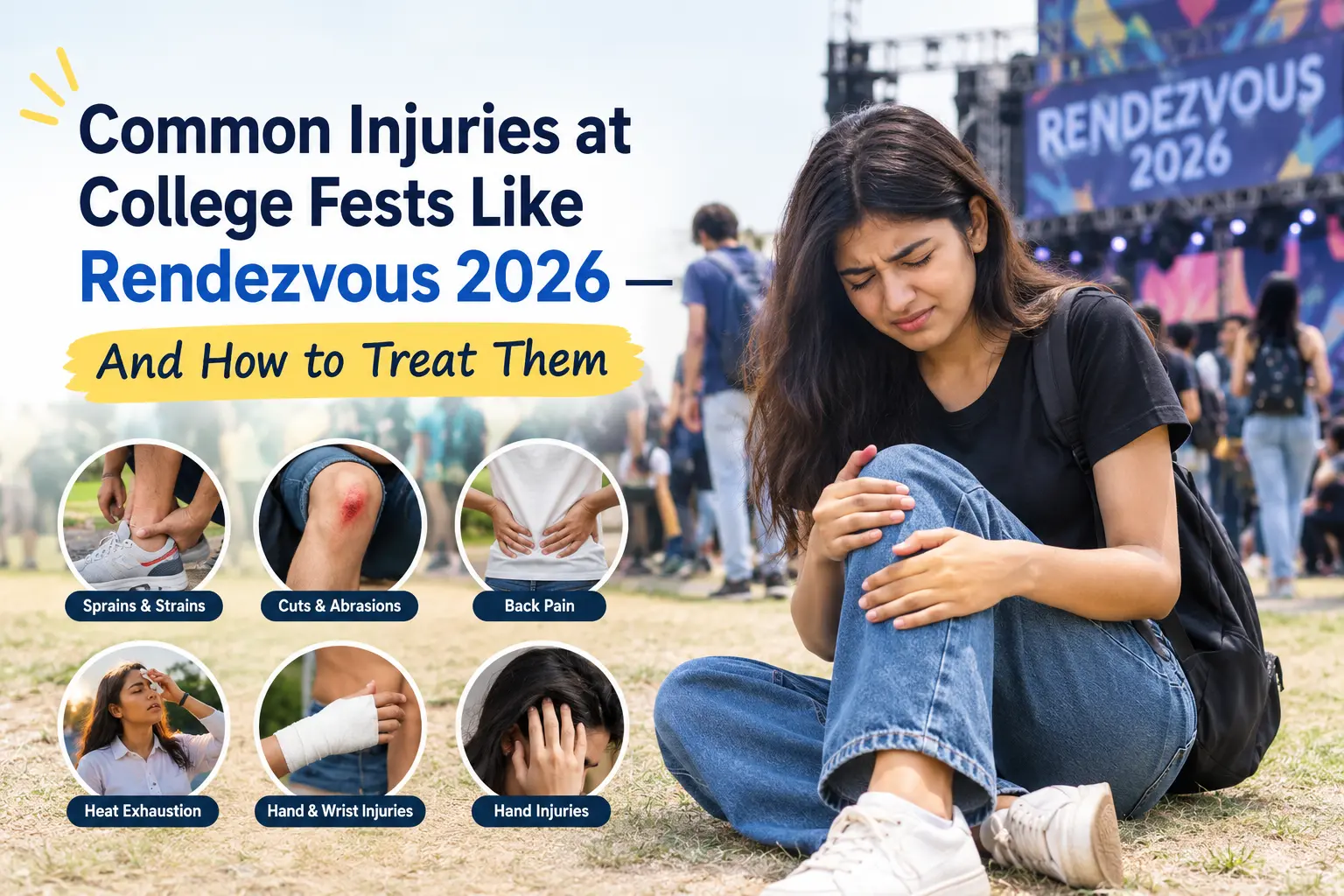
Yesterday we shared that Center for Sports Injury (CSI) has joined Rendezvous 2026, IIT Delhi's annual fest, as its Official Medical Partner (read that announcement here). With the fest now underway from 28th September to 1st October, and 120,000+ people expected across the Live Stage, Artist Nights, and an 80-event Competition Zone, this is a good moment to look at what actually goes wrong physically during a fest like this — and how to handle it.
Why Fest Season Sees a Spike in Sports & Dance Injuries
Dance battles, street dance rounds, fashion showcases, and hackathons don't look like "sports" in the traditional sense, but the body doesn't know the difference. Repeated jumps, sudden pivots, long hours on your feet in the Competition Zone or Food Lane, late nights at Artist Night, and the adrenaline of performing in front of a crowd of 10,000 all add up to the same physical stress a sportsperson faces — often with far less warm-up and far more fatigue.
A few factors make fests like Rendezvous particularly injury-prone:
- Back-to-back rehearsals and competitions with little recovery time between rounds
- Hard outdoor surfaces at venues like the Wind Tunnel, Biotech Lawn, and Competition Zone
- Late September heat combined with long hours outdoors, raising the risk of cramps and dehydration
- Dense crowds — with 15,000+ footfall at the Live Stage alone — that increase the chance of trips, pushes, and falls
- Performers and athletes pushing through minor pain to finish a routine or competition
The Most Common Injuries at Events Like Rendezvous
1. Ankle sprains
The single most common injury at any dance floor or competition zone. A sudden change of direction or an awkward landing roll the ankle outward or inward, straining the surrounding ligaments.
2. Knee ligament injuries (ACL and meniscus tears)
Jumps, pivots, and sudden stops during street dance and sports competitions can strain or tear the ACL or meniscus — cartilage that cushions the knee joint. These often come with a distinct "pop" and swelling within minutes.
3. Muscle strains and cramps
Overworked calves, hamstrings, and lower back muscles are common after hours of dancing or standing, especially without adequate hydration.
4. Shoulder injuries
Falls, lifts in dance routines, or awkward landings can cause shoulder instability or dislocation, particularly in fashion and dance events involving choreography or props.
5. Minor fractures and fall-related injuries
In a crowd of thousands, trips and falls happen. Most result in bruises, but a fracture or complex trauma should always be ruled out if pain and swelling are significant.
6. Heat exhaustion and dehydration-linked injuries
Long hours outdoors at the Live Stage or Competition Zone, combined with physical exertion, can cause dizziness, cramping, and fatigue-related falls — especially during the day sessions.
First Aid at the Venue: What to Do Before You See a Doctor
For minor sprains and strains, the standard first-response approach still holds:
- Rest the injured area and stop the activity — don't try to finish the routine or match
- Apply a cold pack or ice wrapped in cloth for 15–20 minutes to reduce swelling
- Compress gently with a bandage if one is available, without cutting off circulation
- Elevate the injured limb above heart level where possible
- Stay hydrated and get out of direct heat if you feel dizzy or cramped
This helps in the first hour, but it isn't a substitute for a proper diagnosis if the injury doesn't settle quickly.
When to Head Straight to a Sports Injury Specialist
- Swelling that comes on fast, within minutes of the injury
- A joint that feels loose, unstable, or gives way when you put weight on it
- A popping or tearing sensation at the moment of injury
- Pain that hasn't eased after a day of rest, ice, and basic pain relief
- Visible deformity, or an inability to bear any weight on the injured limb
If you notice any of these signs, it's worth getting same-day imaging and a specialist opinion rather than waiting it out — ligament and cartilage injuries in particular tend to respond much better to early diagnosis and treatment.
How Center for Sports Injury Treats Fest and Sports Injuries
As the Official Medical Partner for Rendezvous 2026, CSI brings the same clinical process it uses for competitive athletes to fest-related injuries:
- Diagnosis: on-site MRI, digital X-ray, and MSK ultrasound at DiagKnow Imaging for same-day answers
- Non-surgical care: for milder sprains and strains — rest, bracing, physiotherapy, and where appropriate, PRP or viscosupplementation
- Surgical care: for confirmed ligament and cartilage tears, through arthroscopic (keyhole) surgery and procedures such as meniscus tear repair
- Rehabilitation: structured recovery through CSI PhysioCare, designed to get performers and athletes back to full movement safely
This process is led by Dr Pushpinder Singh Bajaj, Founder Chairman & Managing Director of CSI, who has performed over 5,000 joint replacement surgeries and 15,000 arthroscopic procedures in a career spanning more than 30 years, and currently serves as President of ISKSAA. You can read more about his background on the CSI founder page.
Prevention Tips for Performers, Athletes & Volunteers
- Warm up properly before rehearsals and competitions, even if the schedule is tight
- Wear proper, well-fitted footwear suited to the surface you're performing or competing on
- Stay hydrated through the day, especially during long Live Stage or Competition Zone sessions
- Don't push through sharp or worsening pain to finish a set — most fest injuries get worse, not better, with continued strain
- Build in short recovery breaks between back-to-back rounds or rehearsals where possible
Frequently Asked Questions
What is the most common injury at college dance and sports competitions?
Ankle sprains and knee ligament injuries, such as ACL and meniscus tears, are among the most common injuries seen at dance battles, street dance, and sports competitions during college fests.
When should I see a doctor for a sports injury?
See a specialist if there is significant swelling, a joint that feels unstable or locks, pain that does not ease within a day or two of rest and ice, or if you heard a pop at the moment of injury.
How does Center for Sports Injury treat ACL and meniscus tears?
CSI diagnoses ligament and meniscus injuries using on-site MRI and ultrasound, and treats them with arthroscopic keyhole surgery followed by structured sports physiotherapy for rehabilitation.
Dealing with a Fest Injury? Don't Wait It Out.
As Rendezvous 2026's Official Medical Partner, Center for Sports Injury is here for students, performers, and athletes who need a proper diagnosis, not guesswork. Call 011 4122 3333 or book a consultation online. Explore more on our surgical procedures, meet our consultants, or browse the CSI blog for more injury-prevention guides.