Orthopaedic Care Under One Roof in Delhi: From X-Ray and MRI to Surgery and Physiotherapy
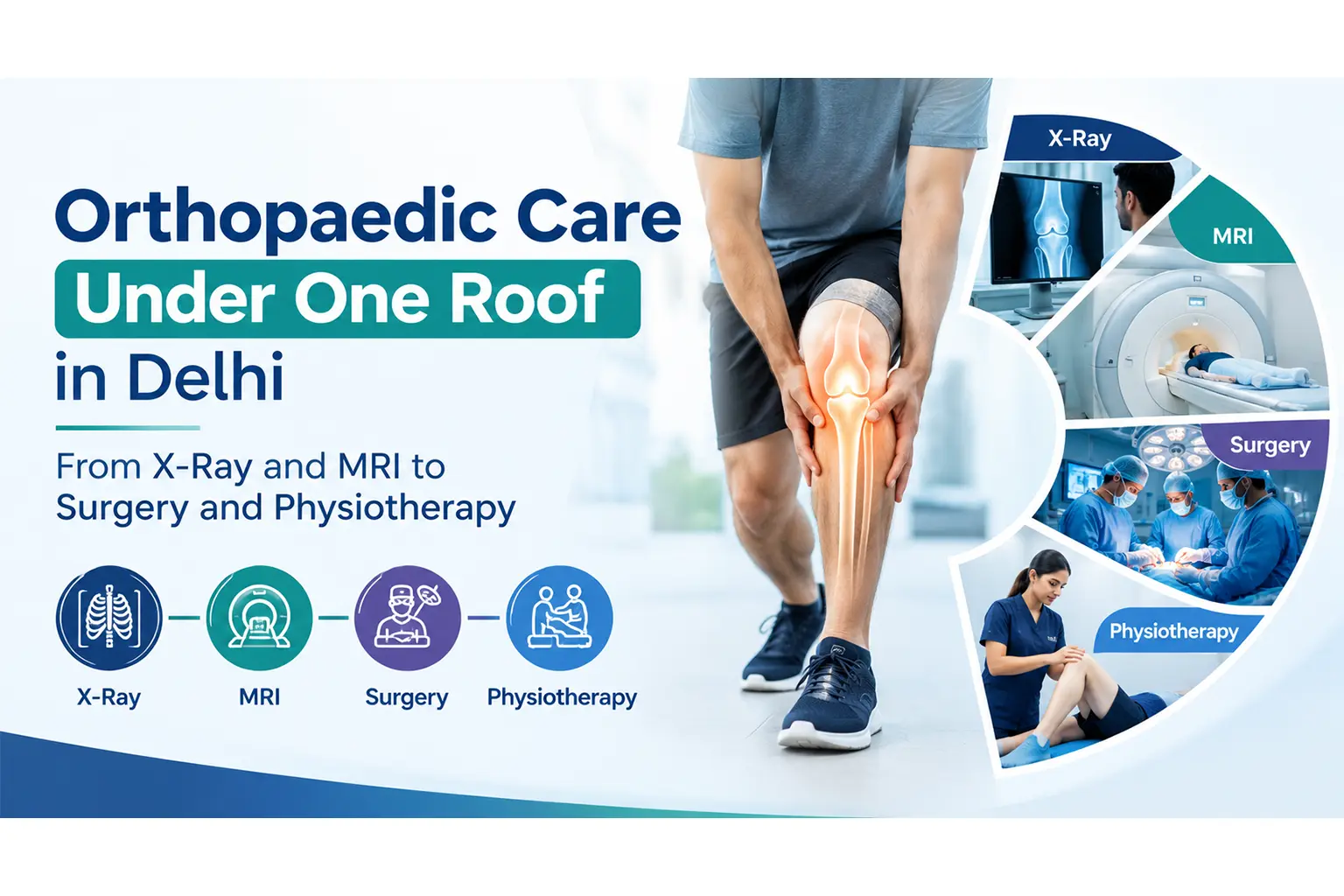
If you have a swollen knee, a shoulder that catches when you lift your arm, or a back that has hurt for months, getting treated in Delhi often means running between places. One clinic for the consultation, another for the X-ray, a diagnostic centre for the MRI, a hospital for surgery, and yet another clinic for physiotherapy. Reports get misplaced, advice differs from one doctor to the next, and weeks pass while the injury settles in.
Center for Sports Injury (CSI) in Safdarjung Enclave, South Delhi, was built to remove that friction. Under the leadership of founder and senior consultant Dr Pushpinder Singh Bajaj, CSI brings orthopaedic consultation, imaging, surgery, physiotherapy, nutrition and counselling together in one facility, so your diagnosis, treatment and recovery are planned by one connected team.
This guide explains what "orthopaedic care under one roof" really means, how the CSI pathway works from your first visit to your return to normal life, which specialists are involved, and how to decide whether this model is right for you.
What does "orthopaedic care under one roof" actually mean?
Many hospitals say they offer everything. In practice, a genuinely integrated orthopaedic centre has three things in common:
- One Consultation rooms, imaging, operating theatres, in-patient beds and physiotherapy are in the same building or campus, so you are not travelling across Delhi between steps.
- One connected Your surgeon sees your scans, blood tests and physiotherapy progress in the same system, and the physiotherapist knows exactly what was done in surgery.
- One care The surgeon, radiologist, physiotherapist and dietitian agree on a single plan with clear milestones, instead of each giving separate advice.
CSI is a dedicated orthopaedic, sports surgery and joint replacement facility with a 20-bed tertiary care set- up, integrated operating theatres, outpatient consulting rooms, diagnostic imaging and an automated pathology lab, all in Safdarjung Enclave.
Why fragmented orthopaedic care slows recovery
Bone, joint and spine problems are time-sensitive. A partly torn ligament can become a complete tear, a small cartilage injury can progress to early arthritis, and weak muscles after surgery can undo good surgical work. Splitting care across several providers creates avoidable delays:
- Repeated Each new doctor asks you to explain your history from the beginning and often asks for fresh tests.
- Scans read without clinical An MRI is most useful when the radiologist and surgeon discuss it together with your examination findings.
- Disconnected A physiotherapist who has not spoken to your surgeon may not know your graft type, repair limits or weight-bearing instructions.
- Higher stress and More trips, more waiting and more paperwork, especially difficult for older patients and for families travelling from other cities.
The CSI care pathway at a glance
Every patient does not need every step. Many people are treated without surgery. The table below shows the full range available so that your plan can move forward without leaving the centre.
| Stage | What happens | Who / where | Learn more |
| 1. Consultation | History, physical examination and a first working diagnosis. You are told clearly whether you need tests, therapy or surgery. | Orthopaedic and sports surgeons led by Dr Pushpinder Singh Bajaj | Our consultants |
| 2. Diagnosis | Digital X-ray, MRI (including open MRI), musculoskeletal ultrasound, bone density scan and blood tests. | DiagKnow Imaging Centre and the automated path lab | Imaging services |
| 3. Non-surgical care | Physiotherapy, injections such as PRP and viscosupplementation, pain management, bracing and nutrition. | Physiotherapy, pain and nutrition teams | CSI PhysioCare |
| 4. Surgery | Keyhole (arthroscopic) surgery, joint replacement, spine, trauma, foot and ankle procedures when needed. | Consultant orthopaedic surgeons, integrated operating theatres | Surgical procedures |
| 5. Rehabilitation | Structured physiotherapy from the first day after surgery to return to work or sport. | Advanced Rehab and Sports Physiotherapy teams | Physiotherapy |
| 6. Long-term health | Nutrition, bone health checks, counselling and follow-up to prevent re-injury. | Dietitian, counselling and bone health teams | Bone health centre |
Step 1: Expert orthopaedic consultation in Delhi
Everything begins with a proper clinical assessment. At CSI, the lead surgeon is Dr Pushpinder Singh Bajaj, Senior Consultant in Orthopaedics, Joint Replacement, Sports Medicine and Arthroscopic Surgery, and Founder Chairman and Managing Director of CSI. Dr Bajaj holds MS (Orth), DNB (Orth), FIAS (UK), MSc-Orth (UK), an AO Fellowship (Germany), a Diploma in Sports Medicine (UK) and an Arthroscopy and Joint Replacement Fellowship (Australia). With around 30 years of experience and training across the UK, USA, Australia and Germany, he treats everything from complex joint problems to sports injuries.
Alongside Dr Bajaj, consultant surgeons including Dr Shrey Singhal & Dr Prakash Jha and visiting specialists cover knee, hip, shoulder, spine, foot and ankle problems.
A good consultation should leave you with three answers:
- what is wrong,
- what your options are,
- what happens
Dr Singhal & Dr Prakash Jha, for instance, is known for spending time explaining each patient's condition and options so that treatment decisions are fully informed.
You can review the full team on our consultants page or read about the founder. To see a specialist, book an appointment online or call 011 4122 3333.
Step 2: Advanced diagnostics in the same building
Accurate diagnosis decides whether you get the right treatment. CSI's imaging arm, DiagKnow, The Imaging Center, offers the tests most orthopaedic conditions need:
- Digital X-ray: the first look at fractures, alignment, joint spacing and Learn more
- Esaote MRI and open MRI: detailed pictures of ligaments, menisci, cartilage, tendons, discs and nerves. The open design is more comfortable for patients who feel anxious in closed See our advanced sports injury MRI service and the guides on open standing (weight-bearing) MRI and why open MRI suits sports injuries.
- Weight-bearing and dynamic MRI: scanning in a natural posture can reveal problems that a lying- down scan may miss. Read how it helps in back pain and in wrist (TFCC) evaluation.
- MSK and Sports 5-D ultrasonography: real-time assessment of tendons, muscles and soft-tissue tears, useful for muscle tear and tendon problems. Learn more
- Bone densitometry: measures bone strength and helps detect osteoporosis Learn more
- Fully automated path lab: blood tests for pre-operative fitness, inflammation and other Learn more
Because imaging is in the same facility, your surgeon can view your scans on the same day the tests are done. If you already know you need a scan, you can also book an open MRI online without a long wait.
Step 3: Non-surgical treatment comes first when it can work
A good orthopaedic centre does not push surgery. Many conditions, from early knee arthritis to tendon pain and frozen shoulder, improve with conservative care. CSI's non-surgical options include:
- Physiotherapy and rehabilitation: manual therapy, exercise programmes, taping, dry needling and machine-based therapy through CSI PhysioCare.
- PRP, stem cell injections and viscosupplementation for suitable joint and tendon See the procedure page.
- Interventional pain management for back, neck and nerve-related pain, with consultant Dr Himanshu Gupta (interventional pain mana66gement, spine and knee specialist).
- Spinal decompression and posture-based programmes for slipped disc and Read about spinal decompression therapy and non-surgical pain management.
If you are unsure whether you need an operation, our post on surgical versus non-surgical treatment explains how the decision is made.
Step 4: Surgery for every major joint and the spine
When surgery is the right answer, CSI's consultants cover most orthopaedic procedures. The table lists common procedures and the surgeons associated with them on our consultants page. Visiting consultants attend on scheduled days, so please call ahead to confirm availability.
| Procedure | Common reason | CSI surgeons | Read more |
| Knee arthroscopy and ACL reconstruction | Ligament tears, knee instability after sports injury | Dr Pushpinder Singh Bajaj, Dr Shrey Singhal, Dr Akshay Lekhi | ACL surgery |
| Meniscus tear repair | Locking, catching, pain on twisting | Dr Pushpinder Singh Bajaj, Dr Himanshu Gupta | Meniscus repair |
| MIS and robotic knee replacement | Advanced knee arthritis | Dr Pushpinder Singh Bajaj, Dr Shrey Singhal, Dr Monish Malhotra, Dr Akshay Lekhi, Dr Ajay Aggarwal | MIS knee replacement |
| Hip replacement and hip preservation | Hip arthritis, AVN, hip impingement | Dr Monish Malhotra, Dr Akshay Lekhi, Dr Ajay Aggarwal | MIS hip replacement |
| Shoulder arthroscopy, rotator cuff and instability surgery | Rotator cuff tears, recurrent dislocation | Dr Pushpinder Singh Bajaj, Dr Shrey Singhal, Dr Kapil Kumar | Rotator cuff, instability |
| Shoulder and elbow surgery | Shoulder replacement, frozen shoulder, tennis or golfer's elbow | Dr Kapil Kumar (visiting, UK), Dr Pushpinder Singh Bajaj | Shoulder replacement, frozen shoulder |
| Fracture and complex trauma surgery | Broken bones, complex or neglected injuries, limb lengthening | Dr Shrey Singhal, Dr Rahul Upadhyay, Dr Monish Malhotra | Trauma surgery |
| Foot and ankle reconstruction | Flat foot, ankle arthritis, foot deformities | Dr Rahul Upadhyay | Flat foot care |
| Spine and endoscopic spine surgery | Slipped disc, sciatica, spinal stenosis | Dr Pawan Choudhary (neurosurgeon), Dr Himanshu Gupta | Endoscopic spine surgery |
Every procedure is planned around what suits your age, activity level and goals. Some highlights:
Knee, ACL and meniscus surgery in Delhi
For active people, ligament and cartilage injuries are the most common reason to consult a sports surgeon. Keyhole surgery allows the joint to be treated through small incisions. Read our guides on ACL surgery in Delhi NCR, meniscus injury and how to tell an MCL injury from an ACL injury.
Robotic and minimally invasive knee replacement
For patients whose knee arthritis no longer responds to medicines, exercise or injections, knee replacement can restore comfortable walking. CSI offers minimally invasive and robotic-assisted options.
Hip care, from preservation to replacement
Hip pain in younger adults may be due to conditions like avascular necrosis, where early diagnosis can sometimes save the natural joint. Read about avascular necrosis of the hip and joint preservation options. When the joint is beyond repair, hip replacement is available through our MIS hip replacement programme.
Shoulder surgery
From rotator cuff tears to recurrent dislocation, shoulder problems are treated arthroscopically wherever possible. See our posts on rotator cuff surgery, shoulder replacement, shoulder dislocation first aid and rehabilitation and frozen shoulder.
Spine, trauma, foot and ankle
CSI also treats spine conditions, including with endoscopic spine surgery, and manages fractures and complex injuries. Learn more about orthopaedic trauma, spine fracture treatment, neck pain treatment and ankle replacement.
Step 5: Rehabilitation that starts before you leave the hospital
Surgery is only half of recovery. The other half is rehabilitation, and this is where a connected team makes the biggest difference. Because physiotherapy is inside the same facility, your rehab can be planned with your surgeon and begin at the right time.
- Dr Ashish Bhatia (PT), HOD of Advanced Rehab Physiotherapy, has over 25 years of experience in manual and machine-based therapy and is especially experienced in recovery after knee and hip replacement, as well as back, neck and joint pain.
- Dr Prakash Jha (PT), HOD of Sports Physiotherapy and Rehabilitation, focuses on sports rehabilitation, manual therapy, biomechanics and rehab after joint repairs and ligament
- Dr Subhri Jain (PT), Senior Sports Physiotherapist, specialises in spinal rehabilitation, posture correction and non-surgical pain management.
- Dr Saurabh Sharma (PT) and Dr Dipu Bordoloi (PT), sports physiotherapists, support return-to- sport programmes, injury prevention and athlete Dr Sharma is a certified Blood Flow Restriction (BFR) trainer and served as an official physiotherapist at the World Para Athletics Championships 2025 in New Delhi.
- Dr Isha Yasmin (PT), Dr Madhu Kumari (PT), Dr Varsha Verma (PT) and Dr Esha Rawat (PT) treat orthopaedic, sports and musculoskeletal conditions across age groups.
Read more in our posts on choosing the best physiotherapist for ACL recovery, sports physiotherapy for chronic pain, technology-assisted rehab with BOBO Motion and how to prevent re-injury after surgery.
Step 6: Nutrition, bone health and mental well-being
Healing depends on more than exercises. Dietitian Dt Garima Tokas (M.Sc. Food and Nutrition, University of Delhi, with a PG Diploma in Sports Nutrition from NSNIS, Sports Authority of India) builds practical nutrition plans for recovery, performance and weight management through Nutritional Health. Patients with osteoporosis risk can use the Bone Health and Women Wellness Center, and athletes or patients struggling with the emotional side of a long injury can access counselling.
Meet the orthopaedic team at Center for Sports Injury
Dr Pushpinder Singh Bajaj: Founder and Senior Orthopaedic, Joint Replacement and Sports Surgeon
Dr Pushpinder Singh Bajaj is a highly regarded orthopaedic, joint replacement and sports surgeon in Delhi. He trained and worked in the UK, USA, Australia and Germany, and brings around 30 years of experience in complex orthopaedic, joint replacement, sports and arthroscopic surgery. He is President of ISKSAA (International Society for Knowledge for Surgeons on Arthroscopy and Arthroplasty) and has trained orthopaedic doctors across the world. Over the years he has treated leading Indian cricketers, tennis players, golfers and shooters, along with corporate leaders, diplomats and public figures. Learn more on the founder page.
Consultants and specialists
| Name | Role | Areas of focus |
| Dr Pushpinder Singh Bajaj | Sr. Consultant, Founder Chairman and MD | Orthopaedics, joint replacement, sports medicine, arthroscopic surgery |
| Dr Shrey Singhal | Consultant Orthopaedic Surgeon | Arthroscopy, arthroplasty including robotic- assisted, complex trauma |
| Dr Akshay Lekhi | Visiting Consultant Orthopaedic Surgeon | Hip and knee replacement, knee sports injuries and ACL surgery, joint preservation, trauma |
| Dr Monish Malhotra | Visiting Orthopaedic Surgeon | Robotic and revision joint replacement, anterior hip replacement, Ilizarov limb lengthening, trauma |
| Dr Himanshu Gupta | Visiting Consultant, Interventional Pain, Spine and Knee | Interventional pain management, endoscopic spine, knee reconstruction and sports surgery |
| Dr Pawan Choudhary | Visiting Consultant Neurosurgeon | Brain and spine surgery, endoscopic and motion- preserving spine procedures |
| Dr Rahul Upadhyay | Visiting Consultant Orthopaedic Surgeon | Foot and ankle reconstruction, orthopaedic trauma |
| Dr Ajay Aggarwal | Visiting International Consultant (USA) | Hip and knee replacement, robotic-assisted procedures, joint preservation |
| Dr Kapil Kumar | Visiting International Consultant (UK) | Shoulder and elbow surgery, shoulder replacement, recurrent dislocation, joint replacement |
| Dr Ashish Bhatia (PT) | HOD, Advanced Rehab Physiotherapy | Post-operative rehab, back, neck and joint pain |
| Dr Prakash Jha (PT) | HOD, Sports Physiotherapy and Rehabilitation | Sports rehab, manual therapy, ligament and joint repair rehab |
| Dt Garima Tokas | Diet Consultant | Sports, lifestyle and weight management nutrition |
Orthopaedic conditions treated at CSI, Safdarjung Enclave, Delhi
Whether you are searching for an orthopaedic hospital in South Delhi or a specialist for a specific problem, these are the areas our team treats:
| Area | Conditions | Related guides |
| Knee | ACL tear, meniscus injury, ligament injuries, knee arthritis, knee pain | Knee MRI guide, best knee replacement surgery |
| Shoulder | Rotator cuff tear, shoulder dislocation, instability, frozen shoulder | Rotator cuff vs instability |
| Hip | Hip arthritis, avascular necrosis, hip pain | Hip AVN guide |
| Spine and neck | Slipped disc, sciatica, spinal stenosis, back pain, neck pain, spine fractures | Back pain treatment, sciatica treatment options |
| Foot and ankle | Flat feet, ankle arthritis, foot deformities, burning foot pain | Flat foot treatment |
| Fractures and trauma | Broken bones, complex injuries, post-accident care | Orthopaedic trauma |
| Sports injuries | Muscle tears, tendon injuries, running injuries, athlete rehab | Top 10 sports injuries in India, running injuries |
| Arthritis and joint pain | Osteoarthritis, inflammatory arthritis, joint stiffness | Arthritis vs normal joint pain |
| Children and teens | Growth-related and sports injuries in young patients | Paediatric orthopaedic care |
Who benefits most from a one-roof orthopaedic centre?
- Athletes and fitness enthusiasts who need a fast, accurate diagnosis and a structured return-to- sport plan.
- Older adults with arthritis or joint replacement needs, who benefit from fewer trips and coordinated post-operative rehab.
- Working professionals with back, neck and shoulder pain who want scans, consultation and therapy in a single visit pattern.
- Parents of young athletes who want child-appropriate assessment and
- Patients from outside Delhi or abroad who want a clear, organised plan for travel and
What a typical patient journey looks like (illustrative example)
The following is a general example, not an individual case. Consider a recreational footballer who twists a knee during a match and finds it swelling and unstable:
- Consultation and examination: the surgeon examines the knee and orders an X-ray and
- Imaging in the same centre: the scans show a torn ACL and a meniscus The surgeon and radiologist review the findings together.
- Pre-surgery preparation: blood tests are done at the on-site lab, and physiotherapy begins to reduce swelling and restore movement before the operation.
- Keyhole surgery: the ligament and meniscus are treated
- Rehabilitation: physiotherapy starts early under a plan shared between the surgeon and the sports physiotherapy team, progressing from movement and strength to sport-specific drills.
- Return to activity: clearance to return to sport is based on strength, stability and confidence, not just the calendar.
Timelines vary by patient and injury, so your own surgeon will guide you.
Insurance, cashless treatment and international patients
Planning the financial side is part of good care. CSI works with a number of insurance panels and TPAs; see the current list on our Panels/TPAs page or call the team to check whether your policy is accepted before admission.
For patients travelling from abroad, our medical tourism programme covers why India and Delhi, cost, the visa and travel guide, accommodation and how the process works.
Why choose Center for Sports Injury for orthopaedic treatment in Delhi
- Surgeon-led, patient-centred care under Dr Pushpinder Singh Bajaj and a team of fellowship- trained consultants.
- Complete facility: consultation, imaging, laboratory, operating theatres, in-patient beds, physiotherapy, nutrition and counselling in one place.
- Modern technology: open and weight-bearing MRI options, 5-D musculoskeletal ultrasound, robotic joint replacement and minimally invasive surgery.
- Sports medicine expertise: CSI has served as the medical partner for major events, including the World Para Athletics Championships 2025 in Delhi. See our patrons and media coverage.
- Trusted by patients: read real experiences on our testimonials page and video testimonials.
- Convenient South Delhi location in Safdarjung Enclave, easy to reach from across Delhi
Frequently asked questions
What does orthopaedic care under one roof mean?
It means your consultation, imaging, blood tests, treatment, surgery and physiotherapy are all available at one facility and coordinated by one team. This reduces delays, avoids repeated tests and keeps your surgeon and physiotherapist working from the same plan.
How do I choose the best orthopaedic hospital in Delhi?
Look beyond advertising. Check whether the surgeons are fellowship-trained in your specific problem, whether imaging and rehabilitation are available on site, whether the centre is transparent about non- surgical options, and what real patients say. Our guides on top orthopaedic hospitals in Delhi and the best orthopaedic hospital in Delhi explain what to compare.
Do I need an MRI before I see an orthopaedic doctor?
Not always. Your doctor will usually examine you first and may start with an X-ray. An MRI or ultrasound is advised only if it will change the diagnosis or treatment. At CSI these tests are on site if needed.
Does every orthopaedic problem need surgery?
No. Many conditions improve with physiotherapy, medication, injections or lifestyle changes. Surgery is recommended when conservative care has not worked or when the injury is unlikely to heal without it.
What is the difference between open MRI and a conventional MRI?
An open MRI has a more open design, which many patients find more comfortable, especially if they feel anxious in closed spaces. Weight-bearing versions allow scanning in a natural posture. Read our comparison of open and traditional MRI and G-Scan versus traditional MRI.
Is robotic knee replacement available at CSI?
Yes. CSI offers robotic-assisted joint replacement along with minimally invasive options. Your surgeon will advise which approach suits your knee. See robotic vs conventional knee replacement for a detailed comparison.
How long is recovery after ACL surgery or knee replacement?
Recovery depends on the procedure, your age, fitness and how closely you follow rehabilitation. ACL patients generally need several months of structured rehab before returning to sport, while knee replacement patients usually begin walking with support soon after surgery. Your surgeon and physiotherapist will give you a personal timeline.
Can I use health insurance for treatment at CSI?
CSI works with several insurance panels and TPAs. Please check the Panels/TPAs page or call 011 4122 3333 to confirm coverage and pre-authorisation steps for your policy.
Can international patients get treated at CSI?
Yes. CSI supports patients from abroad with guidance on travel, stay and treatment planning. Visit the medical tourism page for details.
Which specialist should I see first: an orthopaedic surgeon, a sports doctor or a physiotherapist?
For new or persistent joint, bone or spine pain, start with an orthopaedic or sports medicine consultation so that you get an accurate diagnosis. A physiotherapist can then take over the treatment plan, or work with your surgeon if an operation is needed. If you are unsure, our team can direct you to the right specialist.
How do I book an appointment?
Call 011 4122 3333, use the online booking link, or visit our contact page.
Get your complete orthopaedic evaluation at CSI
You should not have to piece your treatment together across the city. If you are dealing with joint pain, a sports injury, a spine problem or are considering surgery, a single visit to Center for Sports Injury can give you a clear diagnosis and a coordinated plan.
Disclaimer: This article is for general information and does not replace a personal medical consultation. Treatment decisions should be made with a qualified orthopaedic specialist after examination.